How to Implement Engagement Practices for Accurate Attribution and Smarter Campaign Optimization?
Attribution today looks beyond just install. Campaign success is based on how each user interacts with your app after install. Establishing effective engagement practices will allow teams to recognize user behavior, analyze intent and link important actions to the source from which they were acquired.
This guide will teach you how to structure, monitor and analyze enhanced user interactions, enabling precise tracking of attribution and optimize your campaign more effectively.
The Importance of Engagement Practices in Attribution
Traditional attribution typically assigns credit for success to the last-click or impression, while ignoring what a user does after installing. Successful engagement practices help to close this gap by tracking all actions of a user post-installation and connecting those actions back to the respective marketing source.
By analyzing user behavior beyond acquisition, marketers can evaluate the quality of their traffic, instead of just counting the number of visits. This will begin to transform attribution measurement into a measurement of the actual value of users.
Identifying Meaningful Engagement Signals
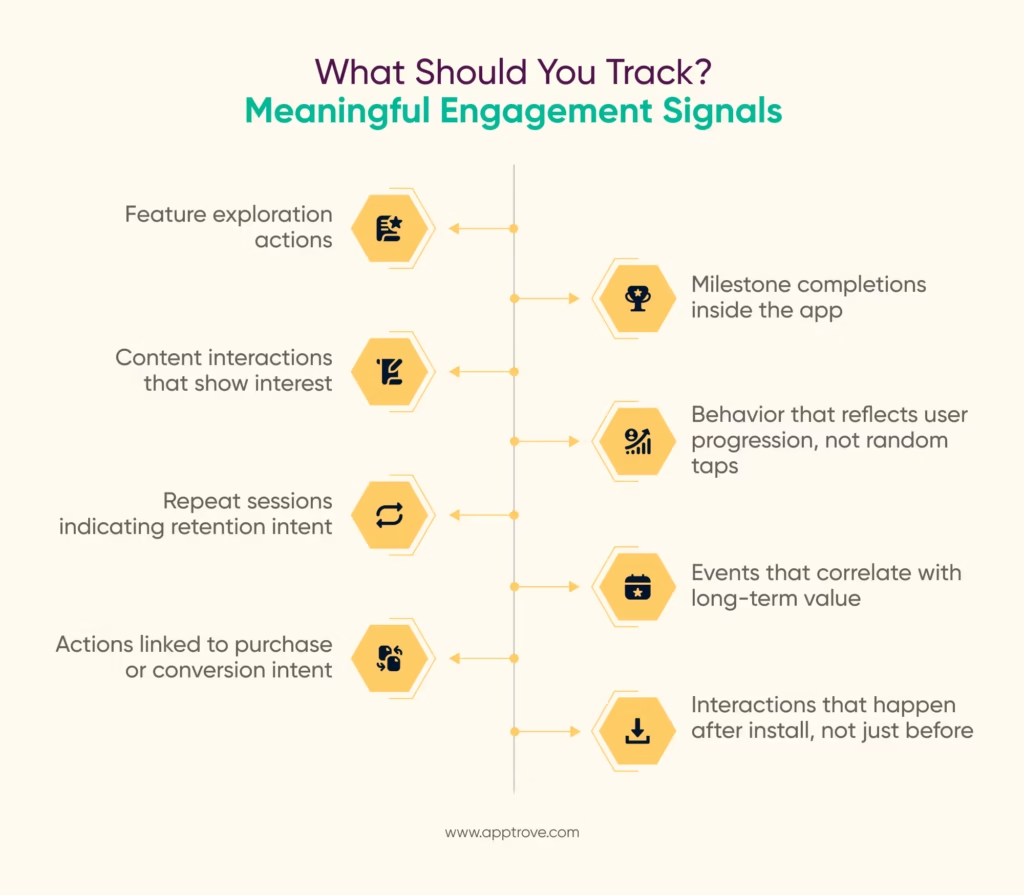
Not every action needs to be tracked. Effective engagement practices will help focus on engagement events that reflect either a progression, interest, or intent.
Examples of engagement signals include:
- Exploring a feature
- Interacting with a piece of content
- Returning to the app
- Performing an action associated with a purchase
Selecting meaningful events for tracking will give you accurate data on the user’s progress through the app.
Instrumentation Strategies for Reliable Tracking
You cannot have accurate data without a properly configured implementation. Well-structured engagement strategies must include consistent event tracking across devices and userjourneys.
The following are several key principles for successful engagement tracking:
1. Use clear and descriptive naming conventions for events.
2. Use uniform event parameters.
3. Separate all system events from all behavioral events.
4. Continuously verify that data is being captured correctly.
By following these four principles, you’ll ensure that there are no missing critical interactions in your attribution chain.
Attribution windows must match user behaviours with conversion timeframes. Advanced engagement practices align attribution windows to reflect the user’s natural behaviour.
For example:
– Longer attribution windows are appropriate for discovery-driven journeys.
– Shorter attribution windows are appropriate for intent-driven activities.
– Balance the length of view-through and click-through attribution windows according to the type of marketing campaign.
By aligning the attribution windows to reflect the user’s natural behaviours, you will significantly enhance the accuracy of your source credit assignment. There are differing degrees of value for every user. Effective engagement strategies provide the ability to segment users based on the level of engagement they have had with your product.
Examples of segmentation include:
– High-activity users
– Users that drop off early
– Users who show intent to purchase
– Inactive users who are almost ready to be re-engaged.
Using these user segments, you will be better positioned to make informed marketing and retention strategy decisions.
Connecting Engagement to Revenue and Lifetime Value
The goal of tracking user behaviour for engagement is to understand its value. Various mature engagement strategies combine early use activity with long-term user results, such as revenue generation and retention, to achieve this.
When such practices are properly followed, they enable teams to:
- Determine what high-quality sources of acquisition are
- Optimize bids for high-value users
- Create look-a-like audiences
- Minimise spending on poor-performing channels
- Visualization of Engagement Trends for Analytics
Data will provide tangible value only when it is easy to visualise and analyze. Good engagement practices include easy-to-understand visual representations of user behaviour change following time intervals.
Key Engagement trend visual examples would include:
- Engagement progression Charts
- User Behavior Funnels
- Cohort Comparison Groups
- Source-Based Trend Analysis
These visualisations provide direction for making informed data decisions.
Identifying Drop-Off Points Within the User Journey
Friction exists in every user journey through the product or service offering. When Good Engagement Practices are followed, there is no question about where the user disengages from the experience.
Mapping Event Flows analysis to identify:
- Points Where Users Lost Interest
- Under Utilized Features
- Opportunities to Improve User Experience (UX)
Identifying and addressing these issues will improve the overall User Experience as well as provide greater visibility for attribution.
Utilizing Engagement Data for Retention and Re-Engagement
First, the User must be acquired; however, the next interaction (if the User was not already) is a continuing engagement strategy. Good Engagement Practices also identify the right timing for reconnecting with the User.
Engagement Insight allows for the use of:
- Personalized Messaging
- Trigger-Based Communication
- Win-Back Marketing
- Loyalty Program Marketing
Turning Engagement Insights into Campaign Optimization
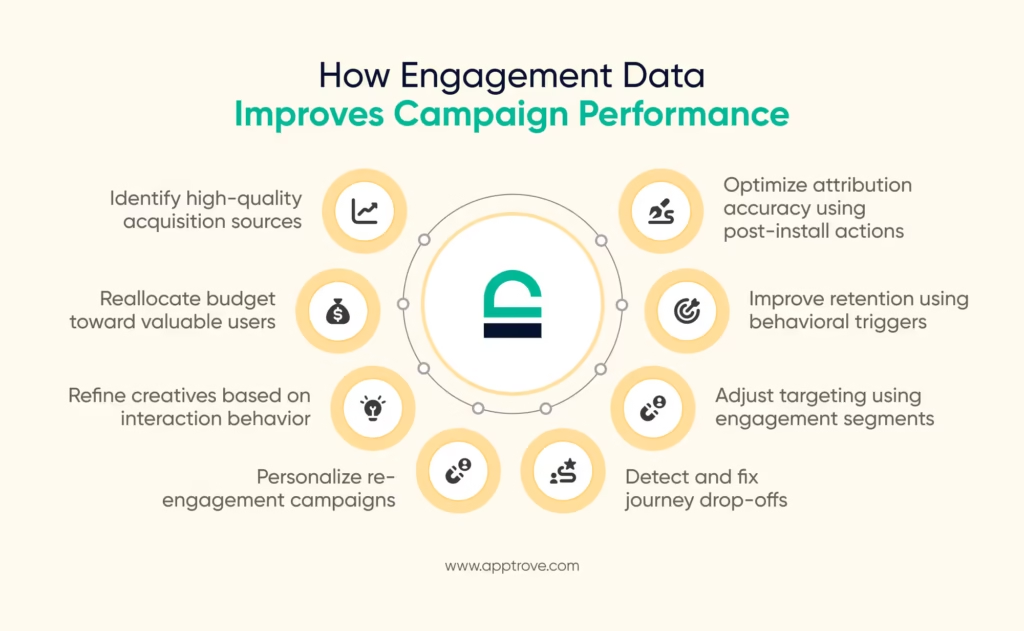
The goal of engagement practices is to achieve actionable optimization, and to create this, behavioral insights must directly inform the strategy for any given campaign.
Some examples of how teams can achieve this are outlined below:
- Move budgets to the best-performing sources
- Improve the creativity based on user interactions
- Adjust targeting based on behavioural segments
- Enhance messaging to better match user intent
Creating a culture around engagement practices
In order to sustain success, there must be alignment across the organization. Long-term engagement practices require the collaboration of the marketing, product, and analytics teams.
The following should all be done regularly:
- Review engagement metrics
- Improve the way tracked events are recorded
- Share insights across teams
- Make data-driven decision-making standard practice
Summary & Conclusion
The use of strong engagement practices will change attribution from being a point-in-time metric to being an actionable performance framework. Engagement practices will help teams to use user behaviour, link attribution to actual events that occurred in real-time, identify revenue-generating activities, and gain a clear understanding of the company’s most successful marketing tactics.
When engaged in consistently, engagement practices allow marketers to exceed install numbers and measure the value of a user. This means that teams will have more effective campaigns, better budget allocations, and overall, benefit from an improved user experience, which will lead to ongoing and sustainable growth for the company.
from Apptrove https://apptrove.com/how-to-use-engagement-practices-to-optimize-campaign/
via Apptrove


Comments
Post a Comment