Mobile App Install Attribution: Models, Methods, Tools, and Metrics for Accurate Install Measurement
The mobile app marketing industry is extremely competitive. With every single install being important and every click vying for the user’s attention, mobile app install attribution plays a critical role in the success of any ad campaign. In effect, mobile app install attribution is the investigator who connects the dots on the journey from ad exposure (what the user saw) to ad clicking (what the user clicked), along with the user finally installing the app (what the user did).
There are thousands of advertisers pouring billions of dollars into user acquisition across Android, iOS, and other emerging platforms. If these advertisers don’t have accurate mobile app install attribution, they will have no way of knowing if the ad spend was effective or not. This guide will examine the various types of models, techniques, tools, and metrics used for effective mobile app install attribution that allows advertisers to accurately measure their advertising effectiveness and returns on their ad investments.
What Is Mobile App Install Attribution?
The fundamental question answered by Mobile App Install Attribution is: “Which of your sales efforts drove the installation of the mobile application?” Mobile App Install Attribution connects the installation and any relevant activity occurring after the installation of the mobile application to a particular marketing campaign or ad network, communication channel, company or even individual ad creative.
To clarify: if a user sees an advertisement on Instagram, activates the advertisement, goes to Apple or Google Play stores, installs your application and opens the application, how do you know which of these events (or what advertising effort) is the credited source of credit-related to that installation? Enter Mobile App Install Attribution. Through the utilization of tracking links, device identification, SDKs, and sophisticated logical processes relative to each of these, a marketer is able to extract and re-create a user’s path to establish credit for an installation.
In a time period in which privacy-driven changes such as APP Tracking Transparency are greatly altering users’ understanding of their visibility, Mobile App Install Attribution is not just critically important; it is necessary for maximizing your investment in advertising on a paid basis without having to waste your resources.
Why You Should Be Concerned About Mobile App Install Attribution
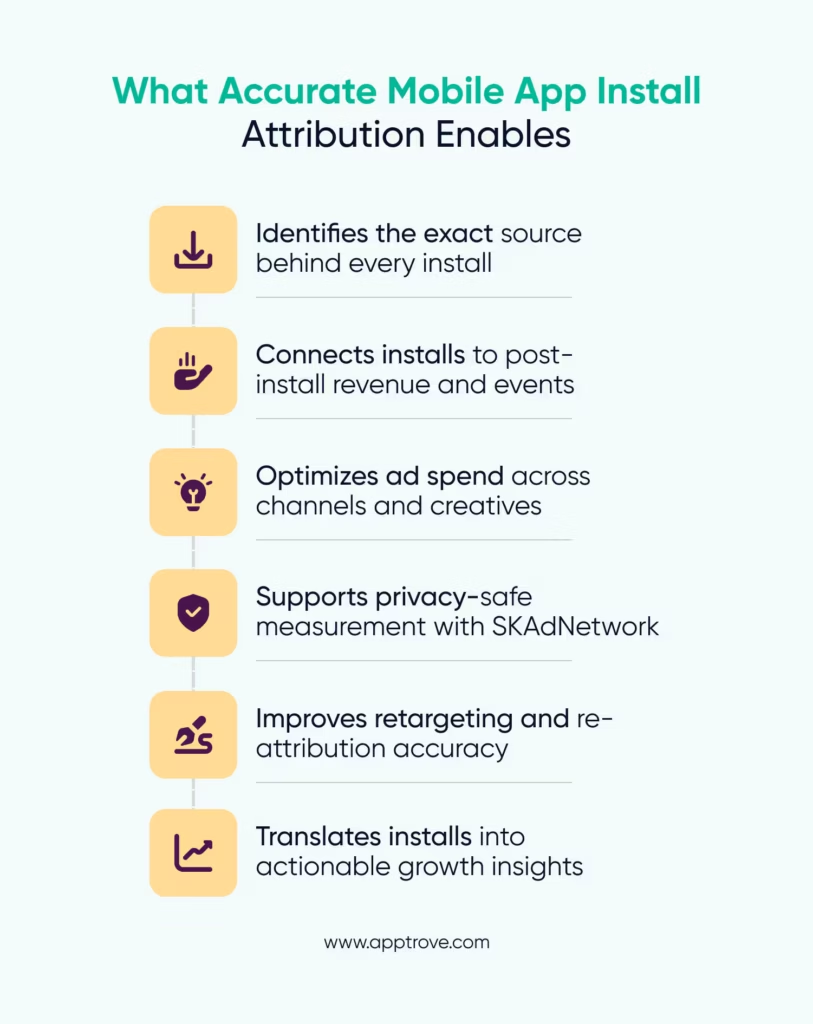
The bottom line is: if you spend dollars on advertising and don’t have insight into what installations you’re truly driving, you are indeed driving blind! Given the rapidly increasing amount of dollars being spent on mobile advertising annually, and the poor attribution of installations on the marketing efforts that generated the installations, it is nearly impossible for marketers to accurately determine where and for what marketing programs they plan to spend their advertising funds. Mobile App Install Attribution provides a very precise solution to this challenge.
Key Advantages
Visibility of Performance – You will find out which creative (from which source) or what marketing campaign led to install.
Spend Optimisation – You will allocate your budget optimally (where installations generate higher revenue).
Post-install Insight – After the installation, you will know revenue generated, in-app purchase activity, and will be able to assess deeper engagement.
Cross-channel Clarity – The ability to establish the source from which installed applications came (ie, web ads, connected TV, social media, etc.)
Mobile App Install Attribution Models:
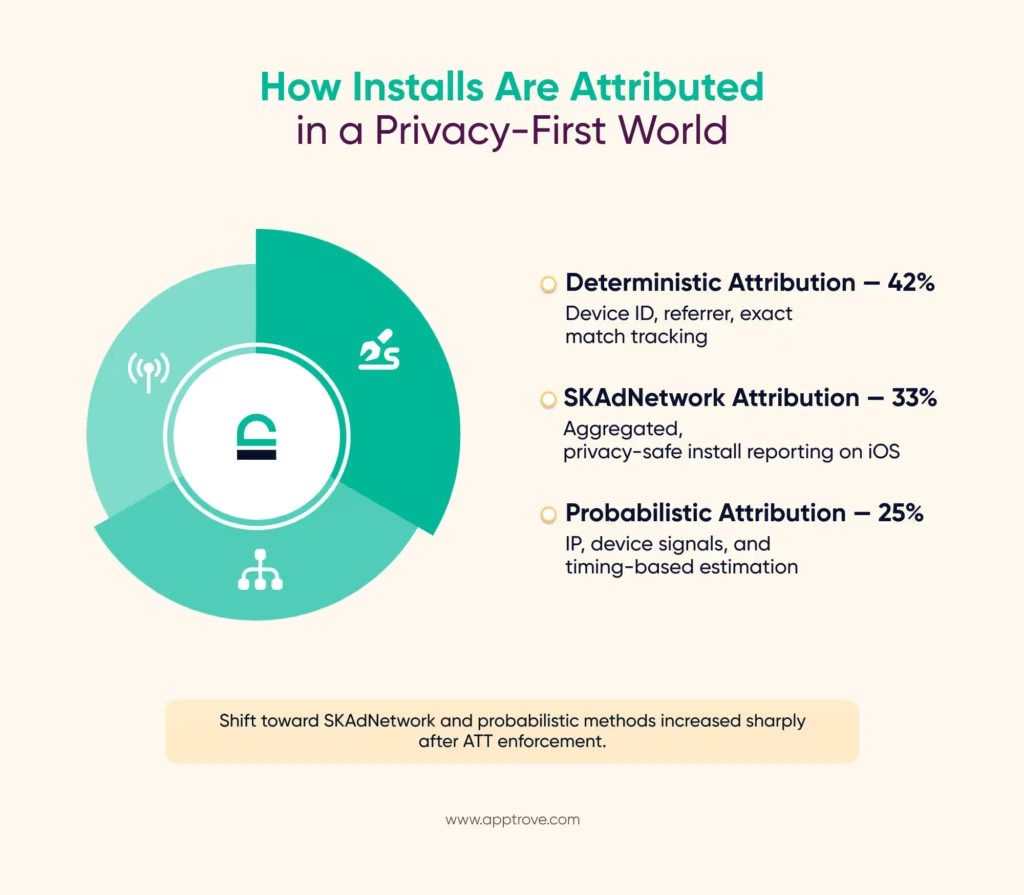
1. Deterministic Attribution
This is considered the gold standard in attribution; a perfect match showing the install originated from a specific click or a specific user action. Deterministic attribution uses unique identifiers for each device (such as IDFA, GAID) or relies on the app’s support to perform attribution (i.e., you use the install referrer for attribution).
The platform uses click data associated with a unique device identifier to assist in attributing the installation with almost complete accuracy.
This model may not be effective if the ability to access the identifiers of a user has been restricted for privacy reasons.
2. Probabilistic Attribution
Where there are no identifiers, such as the many iOS installs without consent, you can estimate the install source using other patterns, such as IP address, device type, etc., and the time of interaction (known as probabilistic attribution). While this method does not guarantee the same level of accuracy as deterministic tracking, it is very important in today’s privacy-first environment.
3. SKAdNetwork Attribution
SKAdNetwork, Apple’s privacy-first attribution framework, was developed to deliver aggregate performance data versus day-to-day user-level tracking. Many tools offer SDK integration with SKAdNetwork as part of their Mobile App Install Attribution solutions. SKAdNetwork allows for less granularity than other methods, but it drives the industry closer to a privacy-first, intelligent and uniformly measured approach.
Attribution Metrics Every Marketer Should Track
The effectiveness of your Mobile App Install Attribution depends on what is being tracked, so here’s what you should focus on:
- Install Source: Which campaign/network provided the install? Good source data will drive optimisations of performance.
- Click-Through vs. View-Through: Users can either install the app after clicking an ad/campaign or simply viewing it. Both can be good signals of attribution.
- Lookback Windows: Attribution Providers use lookback windows from 7 – 30 days to determine if a click or impression can be attributed to the install.
- Re-attribution: If the user uninstalls and reinstalls in the same lookback period, many attribution providers will give credit to the install again – this is good for retargeting optimization.
- Post Install Events: The install is just the start; there are many indicators of how valuable a user actually is, i.e., revenue, sign-ups, subscriptions, and purchases, which are where Mobile App Install Attribution will also have post-install tracking.
Tips for Integration and Implementation: To gain value from Mobile App Install Attribution, you will typically integrate an SDK into your app’s code. The SDK captures install/open/post install data and attribution parameters.
Some important items to consider are:
– Place the SDK as early as possible in your app lifecycle to capture the first install.
– Keep all Lookback Windows consistent across networks.
– Validate your install counts against the app’s CDN.
Challenges in Mobile App Install Attribution
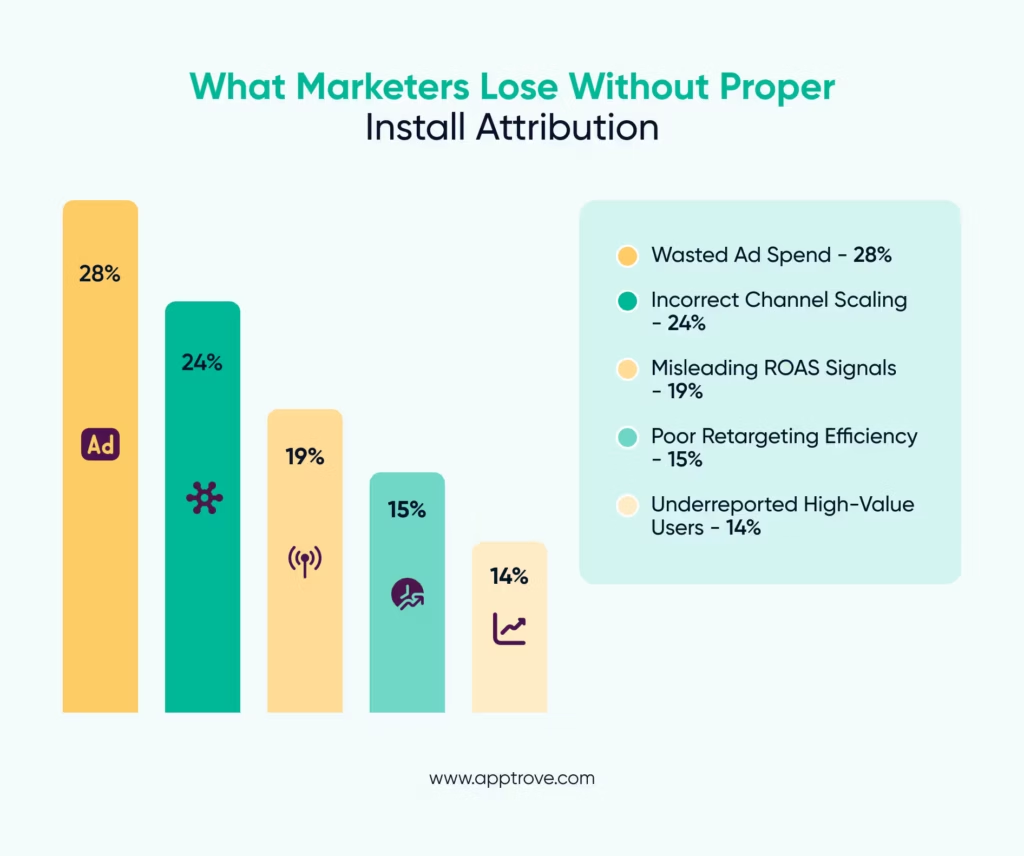
Mobile App Install Attribution has its challenges, even though the science is robust.
Privacy Restrictions
Due to privacy regulations, access to IDFA and other identity identifiers has been limited & creating new attribution methods using probabilistic or SKAdNetwork methods is driving the industry to adapt as regulations become stricter.
Data Differences:
There are many differences among Attribution Platforms, Ad Networks & App Stores when they report their install count. Knowing these differences will help you accurately measure your own performance and that of your competitors
Tool Cost:
Many Attribution Partners charge per install or via subscription; however, having accurate Mobile App Install Attribution data will often justify the cost due to cutting wasted spend & improving ROI.
The Future of Mobile App Install Attribution
As user privacy continues to be an important issue, Mobile App Install Attribution will evolve towards using aggregate methods, machine-learning-based models, & cross platform measurement. Privacy safe frameworks like SKAdNetwork & Aggregate Reporting will remain crucial to marketers & as long as marketers continue to evolve, they will gain an Unfair Advantage on User Acquisition & Budget Optimization.
Final Thoughts
Mobile App Install Attribution must be conducted as part of mobile user acquisition efforts of any kind (including Facebook, Google, TikTok) because this is the only way to gain insight into returns on invested capital with ease and accuracy.
To accomplish this, marketers need to leverage the best practices for attribution and mobile analytics (e.g., utilizing a combination of deterministic and privacy-safe models/frameworks) so that they can create comprehensive measurement systems to both track the volume of user installs and translate those installs into actionable insights that generate growth.
End users for their insights/growth analytics will not only be able to generate installs through their next install campaign but will also generate significantly higher levels of total install-related success at the same time.
FAQs
1. What is mobile app install attribution? Why is it important?
Mobile App Install Attribution identifies the specific campaign, channel or ad that drove installs of your application so that marketers can accurately measure performance in relation to ad spending vs. ROI.
2. How Does Mobile App Install Attribution Work?
Mobile App Install Attribution establishes a connection between interactions of ads and installs/post-install events using a variety of methods such as; tracking links, SDK’s, device signals, privacy-safe frameworks, etc.
3. What are the primary models used in Mobile App Install Attribution?
The core models are: deterministic attribution, probabilistic attribution and privacy-first frameworks like SKAdNetwork for aggregate measurement.
4. What metrics matter in Mobile App Install Attribution?
Some of the key metrics to look at for accurate performance insight are; install source, click-through vs. view-through, lookback windows, re-attribution, and post-install events.
5. What are some of the challenges that effect Mobile App Install Attribution today?
Some of the challenges affecting Mobile App Install Attribution today are; privacy limitations, discrepancies between data across the various platforms, and costs associated with tools, which all can significantly impact accuracy, and therefore, careful implementation and validation are critical.
from Apptrove https://apptrove.com/metrics-mobile-app-install-attribution/
via Apptrove


Comments
Post a Comment