The Invisible Path: How User Flow Decides Mobile App Success
The metrics that receive the most attention with mobile growth are usually big, loud numbers that make the headlines: successful installs, click-throughs, impressions, and CPI. However, the true story begins to unfold quietly after an install has occurred: it lies in the user flow and what happens to a user after they install an app, useful or not, do they convert into customers, or do they disappear completely? Apptrove, a Mobile Measurement Partner (MMP), believes the greatest lever for growth in mobile apps is not traffic volume, but instead the smoothness of the user flow that leads someone from opening an app for the first time to completing a meaningful action.
According to industry research, 77% of users will churn (stop using) within the first 3 days after installing an app, and almost 90% will churn within the first 30 days. These churns do NOT occur because user acquisition was incorrect; instead, users are quickly churning because the flow/options provided through the app were broken, confusing, misaligned with user intent, and/or incorrect.
Why User Flow Matters More Than Installs
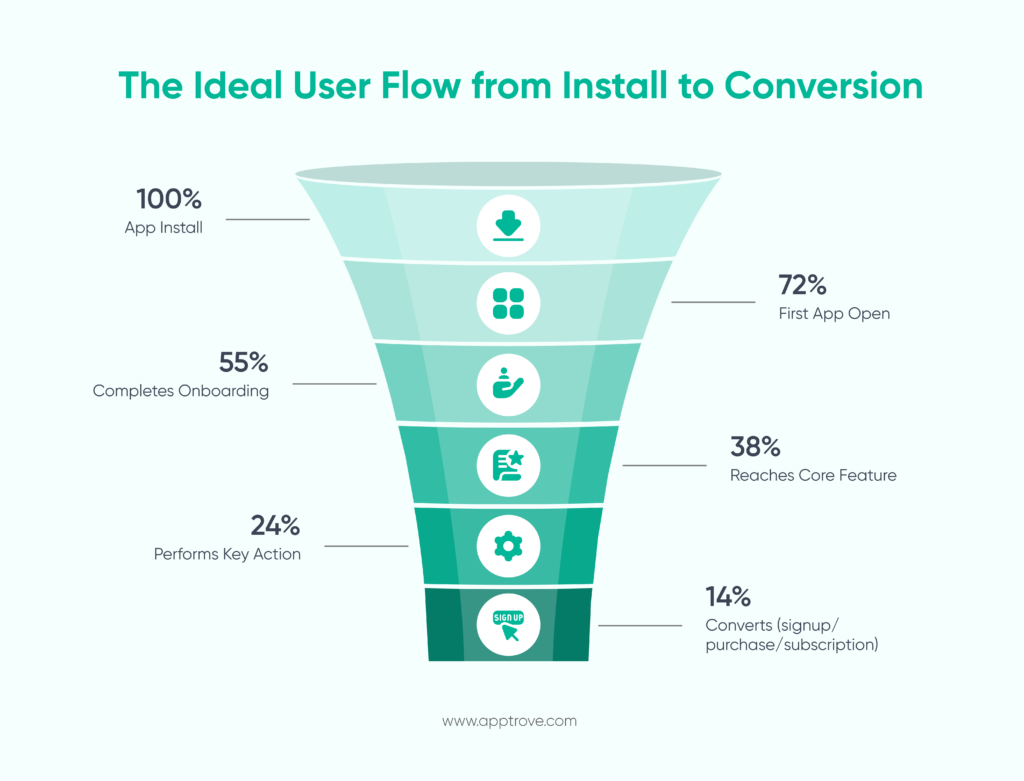
When marketers celebrate their app installations as being successful, they often forget that successful installations are just numbers unless they are tied to user flow. If a user opens an app for the first time, they subconsciously begin to ask themselves 3 questions:
1. What is this app supposed to do? (Intent)
2. How do I operate this app? (Use)
3. Why should I continue to use this app? (Stay)
If a user flow is not able to answer these questions quickly, it won’t be long before they will have ‘churned’ from using that application.
Research shows that 50% of users abandon an app during onboarding if it feels complex. This is not a design issue alone; it is a measurement opportunity. By analyzing user flow, an MMP can identify precisely where abandonment spikes and why.
Mapping User Flow Through Measurement, Not Assumptions
Many times, marketers assume what the customer experience will be, which leads to misconceptions. An MMP compares those assumptions with reality by tracking and visualizing the actual customer journey (event tracking, session timelines, and path analysis) so that you can see:
1. Which screens do users view after installing?
2. Where they hesitate in the app;
3. Steps that lead to conversions;
4. Locations of high exit rates.
Through this data, marketers will be able to optimize their customer experience based on behaviour rather than on guesswork!
For example, If 65% of the users drop off from your customer journey before completing their profile setup, then you can assume that your acquisition program is doing fine, and you have an opportunity to improve onboarding.
User Flow and Attribution: The Link Between Intent and Action
Attribution tells you the source of a user. User flow describes what the user did after arriving from that source. This is where true marketing intelligence lies.
Two users may have been brought through the same marketing campaign; however, their user flows will vary significantly once they arrive at the app. One may engage with the app, utilising most of the functionality before converting to a customer, while the other may have viewed one screen and exited the app in seconds. If you were not analysing user flow, both users would appear the same in your reporting.
Detecting Friction Points in the User Flow
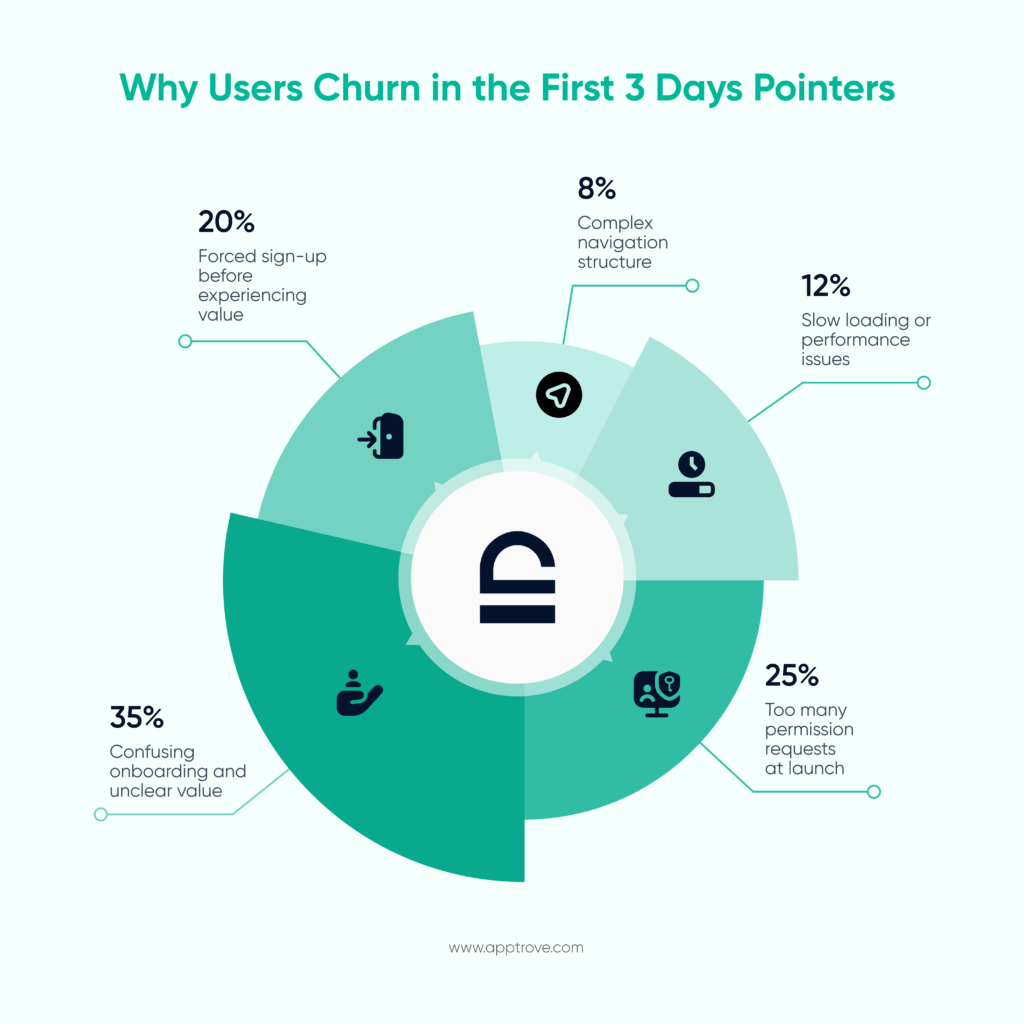
Friction exists in all applications, but can you identify where it lies?
Analyzing user flows frequently uncovers unexpected friction areas, including the following:
* Overly demanding permission requests when the app first launches
* Required registration due to the app not delivering value until a user completes the necessary steps
* Sluggishly loading content
* A poorly designed navigational structure
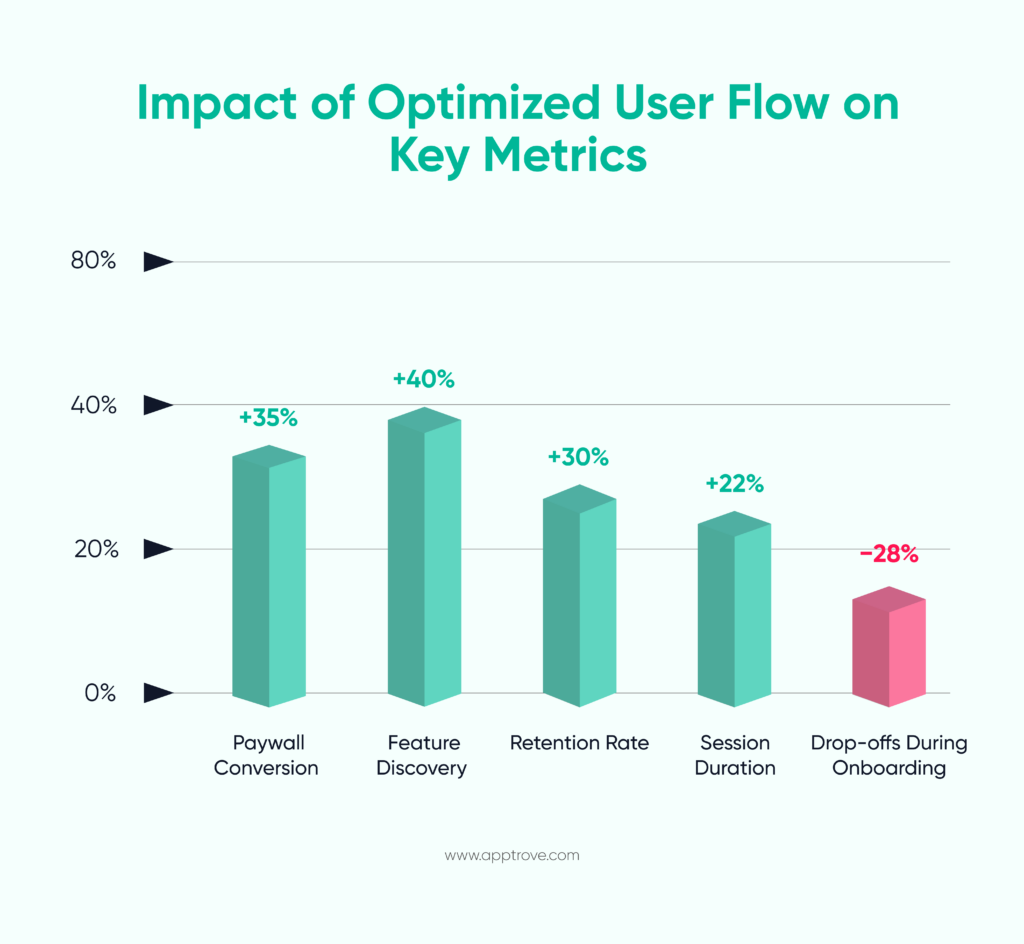
Research indicates that reducing the onboarding process from five screens to three has the potential to increase user retention by up to thirty per cent. However, in order to achieve these retention results, the user flow must be analyzed thoroughly and frequently.
Measuring user experiences through analysis can emulate a heat map when examining user flow.
Using User Flow Measurement to Improve Retention
It should also be noted that retention does not support a notification-based strategy; it supports a journey-based strategy.
When users naturally find value throughout their user flow, they will organically increase their visits. Users return to a product because they experienced the flow as logical beforehand.
Through cohort analysis tied to user flow, it is possible to track which early behaviors indicate long-term retention. An example of this might be:
* Users who complete a tutorial are twice as likely to visit again
* Users who set preferences during the first session have a 40% greater retention rate 7 days after the initial engagement
Marketers can use this knowledge to update the user flow and reposition it to help more users complete their high-retention actions.
Optimizing Monetization Through User Flow
When it comes to monetising a Product/service, the Pricing of the Product/Service is not always the Problem. The Problem Many Times Lays with the Timing of Users Being Introduced/Presented to the Subscription Screen (Paywall). If Users Are Shown the Subscription Screen (Paywall) before experiencing the Benefit of using the Product/service, there will be a Lower Chance of Conversion from Free to Paid. If Customers Are Shown the Subscription Screen (Paywall) after the User Has Lost Interest In the Product/Service, likely, They Will Not Convert to a paid subscriber.
Once User Flow has Been Mapped, It Will Show the Best Moment In Time to Present Users with a Monetization Opportunity (Paywall) based on User Engagement Signals Rather Than Timing Assumptions.
For Example: Apps That Have Aligned Their Paywall with Natural User Flow Pacing Experience Up to 35% Increases In Subscriber Conversions.
Understanding User Flow Is Critical In Utilizing Personalization
All Users Are Not Created Equal and Therefore Should Not Have to Follow the Same Flow Path.
Example: A User Who First Downloaded An App Due to A Game Advertisement Will Not Follow The Same User Flow As A User Who First Downloaded An App Based Upon Email Marketing.
Using a Mobile Measurement Partner (MMP), True Segmentation Can Be Achieved For Personalized User Flow Based on How Users Are Flowing Through The App:
Examples:
- Returning Users Skipping App Tutorials
- Users Being Shown Feature Highlights Based Upon Their Previous Interactions
- Users Prompted Based Upon Their Depth of Use
There Is A Significant Improvement In User Engagement and Session Length In Users Who Are Flowing Through the App as a Dynamic Flow.
Using User Flow To Detect Fraudulent Installs
Fraudulent Installs Will Have a Different Flow than Non-Fraudulent Installs; Therefore, the User Flow Will Identify Them.
For Example, Bots and Incentivized Traffic Will Show Unnatural Usage Patterns, Such As, Very Short Sessions and No Significant Events or Activity, and Identical Navigation Sequences.
An MMP can help marketers identify traffic sources that traditional attribution methods may overlook by analyzing abnormal user flow. This helps marketers protect their budget and ensures the reports reflect actual user behaviour.
User Flow Data Provides Evidence for Product Teams
Product teams spend a lot of time debating where to put features, how to design navigation, and what the structure of onboarding should be, but have no way to get past opinions to get to the bottom of it. User flow data provides evidence that settles these arguments.
If you can show 70% of users are not accessing a specific feature due to the positioning within the user flow, it is clear what you need to do about the design.
In this way, Measurement Influences UX, Not Just Marketing
Continuous Loop of Optimisation with User Flow Data. Optimisation is not a one-time exercise. As features are added and campaigns change, the user flow will also change. Successful applications create dashboards around User Flow Metrics:
- Conversion Rates From Entry To Action
- Percentage Drop Off From Step To Step
- Time Between Major Events
By measuring these metrics in real-time, you ensure that flow continues to meet users’ expectations and your company’s goals.
How An MMP Helps You Become a Master of User Flow
An MMP does not just attribute installs; it tells the story of the journey. When marketing, product, and growth teams can measure, visualise, and take action based on user flow data, they will have a common understanding of how users experience their app. This common understanding leads to smarter
Conclusion: Where Growth Truly Happens
The key to mobile growth is not the ad clicked on, but the events that follow. The “silent” architect of retention, engagement, and revenue for applications is the flow – a user-centric flow of usage that is seamless and provides no confusion or friction to users.
If user flows are measured accurately, then they can provide the blueprint for the sustainable growth of an application. Marketers, product teams, and MMPs can work together using this blueprint, which allows the application to stop guessing and start growing with precision.
Ultimately, success for an application is not about the total number of users who arrive but how smoothly their user flow allows them to remain in the application.
FAQs
1. What does user flow mean in mobile apps?
It refers to the path a person takes after installing an app, from first open to completing key actions. It shows how users navigate, interact, and whether they continue using the app or drop off.
2. Why is user flow important for app growth?
Because installs alone don’t drive success. Growth happens when users move smoothly through the app, understand its value quickly, and complete meaningful actions that lead to retention and conversions.
3. How can poor user flow impact retention?
Confusing onboarding, slow loading, or too many steps can frustrate users. This leads to early drop-offs, with many users abandoning apps within the first few days if the experience feels complicated.
4. How do marketers analyze user behavior after install?
They use measurement tools like event tracking and path analysis to understand where users engage, hesitate, or exit. This helps identify friction points and improve the overall app experience.
from Apptrove https://apptrove.com/how-user-flow-decides-mobile-app-success/
via Apptrove


Comments
Post a Comment