Social Media Influencer Marketing: The Complete Guide to Creator-Led Growth in 2026
Introduction to Social Media Influencers
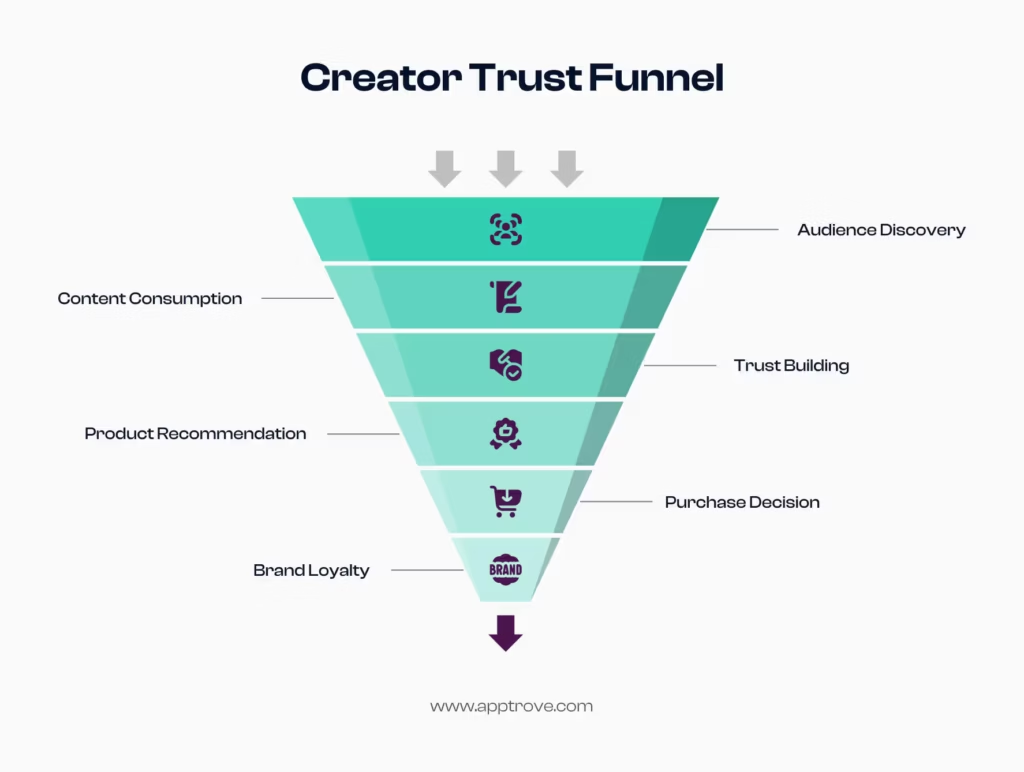
Historically, brands relied upon celebrities to influence them. Celebrities were typically the preferred means of communicating messages about products or services through advertising. Today, however, when consumers are looking for a recommendation about a product or service, they are most likely to trust an everyday social media influencer compared with an advertisement published in a traditional media format. The desire for authenticity has fueled creator-led commerce, which has become one of the most powerful influences on digital marketing today.
According to marketing experts, regardless of what you want to accomplish via marketing, whether building brand awareness, enhancing engagement from customers and prospects, obtaining new mobile app users, or driving sales leads, Social Media Influencer Marketing is an important part of the entire customer journey. Therefore, as more marketers look to develop robust attribution and measurement capabilities, it is essential to understand how users find, engage, and convert as a result of creator content, and learn mobile attribution fundamentals, which is vital to understanding how creator-driven campaigns contribute to conversions and long-term growth.
Today’s Social Media Influencers are not solely responsible for producing content but also act as an authoritative source that has the capacity to affect a consumer’s decision(s) about what they decide to purchase and the growth of their buying habits; hence, brands have an opportunity to leverage economy-of-scale impacts of these Influencers in the digital landscape – this provides an avenue for further collaboration with these Influencers as there is no alternative medium of creating a community and engaging in constructive dialogue to impress onto the Influencer an action they should take.
Furthermore, Wishlink is changing how creators connect commerce with content, thus allowing them and brands to turn recommendations into tangible outcomes. This guide explains how Influencer marketing is defined, its continued growth potential, the future of creator-driven commerce, effective techniques for maximizing Wishlink, and how to utilize data measurement to develop strong, successful relationships with creators to deliver measurable business impacts.
The Importance of Social Media Influencers Over Traditional Advertising
Over the last 10 years, how consumers find, consider, and buy things has changed significantly. In the past, traditional marketing has been the main way to reach people until the customer journey is complete. Traditional marketing used many methods to try to create the largest audience possible. Today, consumers see thousands of advertisements daily; therefore, it is becoming increasingly challenging for brands to catch people’s attention solely through traditional advertising methods.
Because of this shift in consumer habits, Social Media influencer marketing has become popular. According to Sprout Social’s 2024 Influencer Marketing Report, nearly half of consumers make a purchase at least once a month because of influencer posts. This shows how trustworthy, organic content created by social media influencers can be more powerful than a polished advertisement, especially when influencers engage their audience through trust, authenticity, and community. A modern social media influencer is not only helpful for promoting products, but also for educating, entertaining, inspiring, and assisting consumers in making purchasing decisions through content. Therefore, as consumers become more selective about the information they consume, content creators are now considered trusted sources of information that connect brands directly with consumers.
The Evolution of Consumer Trust
Today’s consumers have more access to information than ever before. Prior to making a purchase, they will often research products thoroughly, check out the reviews posted online about that product, check out videos related to the product, and ask individuals they trust for a reference before they purchase an item.
With traditional advertising, advertisements have almost always been used to communicate what a brand wants you to believe about their product or services; however, when it comes to creator content (or content owned by someone other than a manufacturer), you’ll often see actual, real-life experiences showing how to use the product.
Historically, trust has been established on the web based on the brand messaging; however, the shift from traditional advertising as the main source for building trust by a consumer has evolved dramatically toward using a social media influencer as a credible source for an independent opinion, a demonstration of how to use a product, and a personal experience that will create trust with the consumer. Therefore, trust is becoming an increasingly important currency within the modern marketing world.
Global trust research also reinforces this shift toward creator-led communication. Edelman’s 2022 Trust Barometer found that 56% of people who follow influencers across 14 global markets trust what influencers say about brands much more than what brands say about themselves in advertising. This shows that consumers are often more likely to believe recommendations from people they follow than direct brand messaging, further confirming the value of creators in building trust.
Community-Led Buying Decisions Have Grown Exponentially
Nowadays, no one makes a single purchase decision alone. Social platforms have evolved to where people are impacted by other members of an online community when they make a purchase, whether it be a clothing item, beauty product, software subscription, or app download. People talk about their purchase decisions, ask questions, and seek out recommendations from others before making a decision.
As a result, Social Media influencer marketing has also shifted towards being a community-based marketing approach. Successful creators/builders create a loyal audience by providing them with engaging content to consume on a regular basis, creating an atmosphere of familiarity and trust. And when the creators share their recommendations in a community, the consumer feels like they are getting advice from a friend instead of from a marketing campaign.
Because of this growth of creator-based communities, more brands are focusing on developing a connection with creators through meaningful engagement/rather than just trying to increase the number of people who see their advertising through an advertisement increase in reach.
Creator Recommendations Lead to Higher Conversion Rates
When you partner with a social media influencer, you can reach consumers at different points in their buying process. Creators will usually make product recommendations in a more natural way while they share educational, entertaining, or lifestyle content rather than in a forced manner like traditional advertising, which interrupts what users want to see. Users will be able to see that their recommendations are more trustworthy than advertising, thus making them more likely to engage and eventually convert.
In addition, when brands are using Social Media Influencer Marketing as a strategy, it’s no longer just for building awareness; it’s a measurable growth channel that can deliver traffic to your website, help you collect app downloads, drive product sales, and build long-term customer loyalty when used with effective measurement and attribution solutions.
Going Beyond Likes and Followers in Social Media Influencer Marketing
When thinking about Social Media influencer marketing, most people think about their number of followers, how viral their content has gone, or how many likes someone has received on their posts. While those are important aspects of influencer marketing, they are just scratching the surface of what makes influencer partnerships successful.
Social Media Influencer marketing today is about audience trust, relevant content, community engagement, and the ability to create an actual impact on a business.
As brand marketers are looking for quantifiable results, the focus of conversations between marketers and influencers has evolved from asking, “How many followers do you have?” To ask “How well can you move customers through the purchase decision?” Understanding this will allow you to build better influencer partnerships and achieve better results.
What Is Influencer Marketing?
Influencer Marketing refers to the partnership between brands and content creators in order to promote items, businesses, and/or experiences to the creators’ respective audiences. The partnership between the creator and the brand can occur in one of the following ways: through an affiliate link or promo code for the creator’s audience; as part of an ad campaign on social media; or via direct contact with a target audience. For many creators, their trust and credibility have already been established among their fans through their content creation.
In addition to providing product recommendations, creators use their influence to help fans discover new brands, educate them about possible purchases, demonstrate how to use a product, answer questions, and ultimately influence what fans buy. Connecting authentically to fans is why influencer marketing is among the fastest-growing channels in digital marketing today.
Because consumer preferences are constantly changing, more businesses are now using influencer-centric campaigns to generate brand awareness, increase brand engagement, acquire customers, get app installs, and develop long-term brand loyalty.
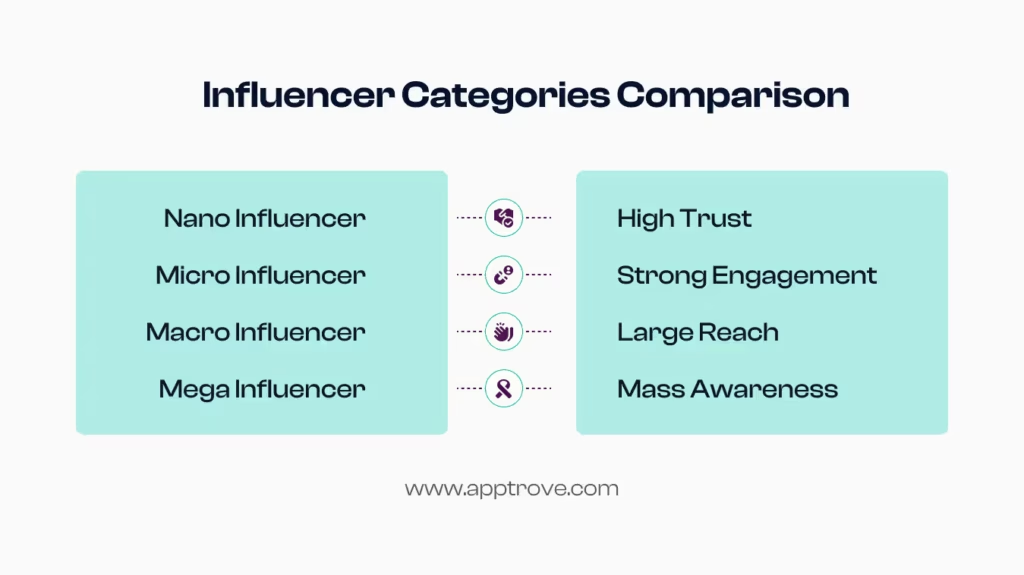
Types of Influencers
Each type of Influencer usually serves a different purpose. Different creator types will deliver a variety of benefits, depending on your Campaign Goals.
- Nano Influence
Nano influencers have a small, very engaged following. They typically create content that feels personal and relatable, and can be an excellent way for brands to build relationships based on trust and authentic interactions and conversations with their audiences.
- Micro Influence
Micro influencers typically have an audience between the size of a nano influencer and a macro influencer and have considerable engagement with the audience. Micro influencers are often seen as niche experts and can assist brands in reaching specific, niche communities.
- Macro Influence
Macro influencers offer a larger audience, but they also provide greater reach across more segments. Brands tend to use macro influencers to build awareness within multiple segments while retaining reasonable engagement levels.
- Mega Influencer
Mega influencers have a massive following and huge visibility. They often create campaigns that intentionally generate maximum visibility for the brand and provide an opportunity to introduce the brand to the masses quickly.
Most successful Influencer Marketing campaigns do not rely on audience size alone as the primary driver of Success; instead, they place greater emphasis on audience quality, alignment with campaign objectives, and relevance and engagement with the audience.
How Brand Marketing Performance Has Been Evaluated Through Influencers
Influencer marketing success goes beyond likes and comments. Engagement metrics may show interest, but often do not lead to actual business results.
Brands utilize different metrics when evaluating a partnership with a creator. These include:
- Reach / impressions
- Engagement rate
- Website visits
- Link clicks
- Application installs
- Conversion rate
- Customer acquisition rates
- Revenue generated
- ROI
Many companies utilize mobile attribution and analysis to analyze the impact that creator-generated traffic has on conversions. This helps marketers get past vanity metrics and find metrics that reflect actual business performance.
Influencer Marketing Myths
Even though Influencer Marketing continues to expand as an increasingly effective channel of marketing, there are numerous mythical assumptions surrounding the industry itself.
One of these mythical assumptions is that the larger the influencer, the better the results. However, not always does reach provide total value; audience relevance and trust can often have a greater effect than reach alone.
Another is that Social Media influencer marketing only works for consumer goods. As things evolve, there is no longer just one type of influencer with a limited number of industries; today, creators influence buying behavior within many verticals, from tech to finance to education, travel, mobile, and e-commerce.
One of the most debated myths is that creator campaigns can’t be tracked and measured accurately. With the emergence of modern attribution tools, tracking systems, and performance analytics, brands can finally see all of the touch points along the customer journey and can get a true measurement of the effect of creating a partnership.
Key Takeaway: The best influencer is not necessarily one with a big following. Instead, it is someone whose audience matches your target market and campaign goals.
The Role Of A Social Media Influencer In Today’s Customer Journey
Today’s customer journey is not as straightforward as it once was, as a linear path from an advertisement to making a purchase. Many of today’s consumers will interact with many different channels and devices, through many different touchpoints, before ultimately making a decision to purchase. Some of the ways they might encounter a product include via the creator’s video, researching the product on a webpage, comparing with other products, reading reviews, and coming back to make a purchase days or even weeks later.
The evolution of the customer journey has also resulted in a larger role for social media influencers in the buying process. Many times, influencers are involved in assisting consumers throughout the entire customer journey, not only assisting with one interaction. Influencers can assist with creating the initial awareness of a product, sustain awareness by driving repeat purchases for a product, and provide consumers with content that helps to continuously shape perceptions and impact decision-making.
Awareness Stage
The first step on every consumer’s journey begins with discovering something new. Until they know something is out there, consumers can’t consider whether they want to purchase or download an item or application.
This is often where a social media influencer generates the initial impression of a product in a consumer’s head. Influencers create video content, make tutorial videos, review products, create lifestyle-based content, and make general recommendations. The creator’s content allows them to introduce the audience to the product in a way that feels engaging to them and is not disruptive to their experience, like traditional advertising is.
This means brands can increase their level of visibility while reaching potential customers through channels they may not have successfully connected with through traditional marketing means.
Consideration Stage
Once a consumer has an awareness of a product, it is usually time for them to start researching it, such as looking into product features and comparing them to other products, or seeking recommendations and determining if the product will meet their needs.
Creators have an instrumental role in providing demonstrations and tutorial videos, sharing real-life examples of using a product, as well as answering frequently asked questions about products. Creators help minimize uncertainty around a product for potential customers and ultimately create additional confidence in these consumers before they make a purchase.
This is why there are so many brands spending a great deal of money on Influencer Marketing strategies. Through educating audiences during the consideration stage, they help to move consumers further down the purchase funnel and get them one step closer to making a final purchase.
Conversion Stage
The conversion process is when you create awareness and interest and help someone take action in some way that is specific to your campaign objective; examples of actions taken would be to buy something, download an application, sign up to use a service, or accomplish something else that you desire.
One of the best ways to improve conversion rates is to use a trusted social media influencer. They have already built trust and established a following; their recommendations are very well received by their audience. Additionally, there are many tools to assist with converting an audience from consuming content to taking actions, such as affiliate links, creator storefronts, and platforms like Wishlink.
When combined with a good attribution and measurement strategy, creators allow brands to better understand which creator-driven interactions help the most with conversion.
Retention/Advocacy Stage
The customer journey does not stop after the first purchase; it continues to develop over time, as brands build longer-term growth through retained satisfied and loyal customers.
Many creators keep their audience engaged long after the first conversion by providing them with timely updates, tips on products, tutorials, and consistent recommendations. This perpetuates an ongoing relationship with the customer and gives them a reason to repeat purchase.
A happy customer may eventually become a brand advocate, sharing their experience through their own community and expanding the impact of the creator-driven influence.
The Influence of Creators in Multi-Channel Customer Journey
Today’s customer journeys consist of many different touchpoints along their journey. For example, a customer may find a product via one influencer/creator, do research on multiple platforms, visit the website several times, and ultimately make a purchase through another type of channel.
Understanding these multi-channel journeys is now more important than ever for marketers, as it will allow them to have a full understanding of how creator-generated content influences an overall result. Marketers are now able to measure all three aspects of their campaigns (mobile attribution, analytics, and campaign metrics) to get clearer visibility of how each of the multiple touchpoints is influencing their customers’ decisions.
With an understanding of the entire customer journey, marketers will be able to move away from the “Last Click” mentality and understand the overall impact that creator partnerships have had on driving growth for their business.
Key takeaway: Social Media Influencers or Creators will influence all stages of the customer journey, therefore creating value not only in creating awareness for your company but also in creating conversions, retention, and long-term customer loyalty.
An Overview of the Development of the Wishlink Creator Economy & How Social Commerce Has Grown
The creator economy exists beyond just the creation of content. Initially created as a way for people to express their opinions, experiences, and/or expertise online created the foundation of a multi-trillion dollar ecosystem where creators influence the buying decisions of consumers, create awareness of products, and generate measurable revenue for brands.
As consumers continue to be influenced by recommended content from people they trust, social commerce continues to be one of the fastest-growing segments of digital marketing in terms of percentage growth. This transition has created opportunities for both brands and creators to convert engagement into action. A Wishlink creator is part of that change, helping their audience transition from inspiration to purchase with the help of curated recommendations and good, solid content focused on commerce.
What Is a Wishlink Creator
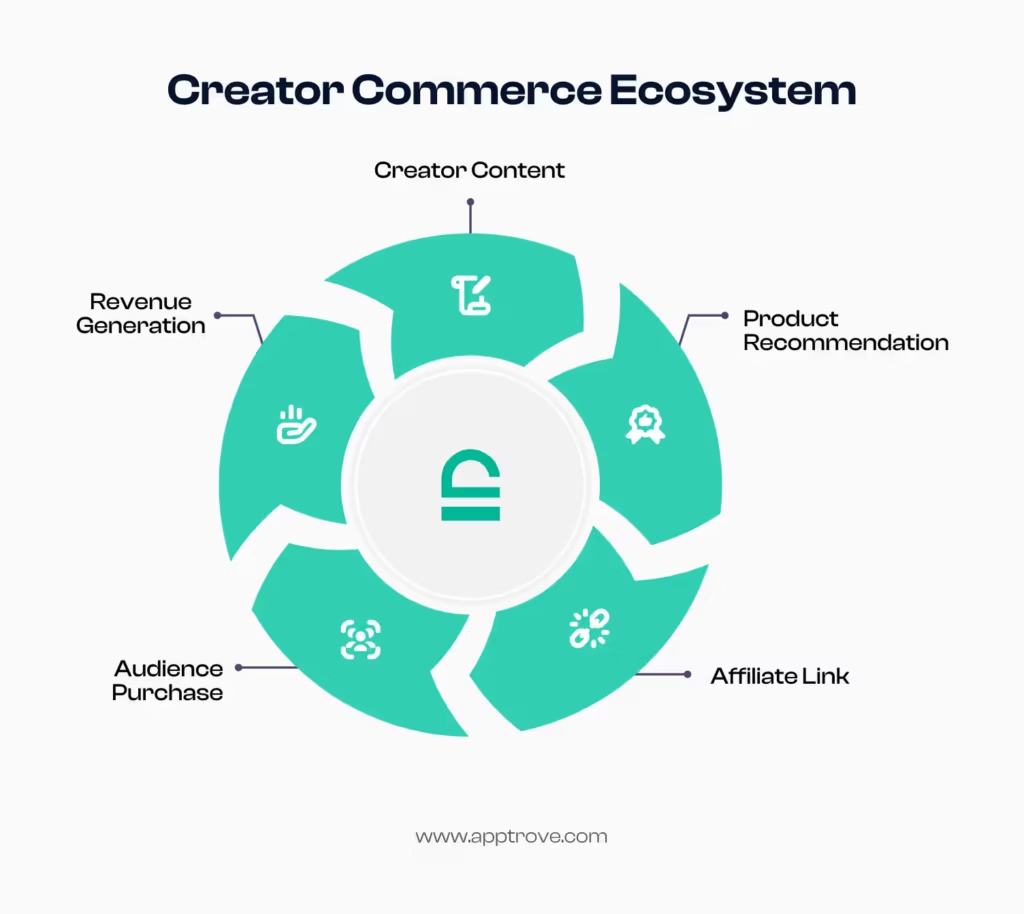
A Wishlink creator is a person who creates and shares content on Wishlink to display, share, and arrange product suggestions they have made to their viewers. By doing it this way, instead of showing their followers long searches, they ease the experience of buying by providing curated collections and direct links to products they have suggested.
This process works well for both the creator and the consumer. By providing access to the products that were suggested through the content, the consumers can now view them in an easier manner, as well as by providing an engaging shopping experience for the consumer.
As the amount of commerce created by a creator continues to grow, more and more platforms that connect the content to the ability to purchase these suggestions will become a major source of income for the creator while providing the creator with significant value to the community that they have created.
The Rapid Growth of Creator Commerce
Consumer habits have changed a lot within the last few years. The typical online shopping experience includes many searches, product comparisons, and multiple decisions that must be made prior to making a purchase. With creator commerce, trusted product recommendations from creators are provided to consumers during the product discovery process, which makes it easier for consumers to find the products they want.
Often, consumers do not go out and actively hunt for products, but will discover them via the creator they already follow and trust, which also reduces the level of friction in the buying journey so that the entire process of product discovery seems more natural than ever.
According to industry analysts, social commerce continues to grow worldwide, while consumers grow increasingly comfortable purchasing products as a result of being influenced by creator content. The combination of trust, convenience, and personalized recommendations is rapidly leading to the growth of creator-led shopping experiences.
Establishing Relationships and Creating Authentic Connections Between Content and Commerce
There is no clear distinction between entertainment, educational, and shopping experiences. Today’s consumers have an expectation that they will find products while they are watching a video, visiting their social media account, browsing an article, or enjoying the content of a creator.
A “Wishlink” Creator exists at the center of the combination of these experiences by providing engaging and entertaining content, together with recommending products. The combination of engagement with inspiration creates a path for the consumer to take action.
This evolution in media has changed what was once a method of raising awareness to a method of generating revenue and has created value and benefits for both brands and creators through their partnership. Brands see the importance of having a partnership with a creator through the various purchase stages of the journey or funnel, making the value of a creator’s content to a brand very meaningful.
The Importance of Better Measurement Tools for Content Creators
The evolution of creator commerce has made measuring the success of creators’ work a priority. While likes, shares, and comments provide relevant data for engagement, they do not provide the complete picture of the actual business impact of creator campaigns.
Both creators and brands need access to a variety of metrics to evaluate success. Examples of these metrics include:
• Number of clicks on links
• Traffic to websites
• Number of app downloads
• Product sales
• Rates of conversion from sales
• Total amount of revenue generated by the campaign
Without properly measuring creator performance, evaluating which content strategies, creator partnerships, or campaigns produce successful outcomes becomes difficult.
Through the use of marketing analytics and attribution technology, creator performance data can be linked with measurable results to assist brands with decision-making and assist creators with identifying the content they know resonates with their audience.
Ways that Creators can Use their Audience to Drive Brand Growth
Brands have traditionally relied on advertising, marketing, and other techniques to reach potential customers. However, as consumers have changed, so too have the ways that brands are able to use their relationships with creators to connect with their customers.
Thus, brands that do not build trust in their connections with their creator partners (that is, through audience engagement) will miss out on the opportunity to convert the customers of these creators into their brand advocates.
Evidence of this is shown in how many brands are beginning to recognize the power of working with creators to build deeper connections and create lasting relationships with their customers.
The growth of social commerce is also playing a role in further establishing the role of creators as meaningful contributors to the modern business landscape, creating needed trust in their brands and influencing their purchasing decisions.
As the number of creators and their popularity continue to increase, organizations that use the creator model of Wishlink as a way of measuring and managing creator partnerships will be seen as the future leaders of business in terms of leveraging their creator partners and their ability to provide a seamless customer experience.
Using Wishlink To Connect Creators With Brands
There’s no denying that creator commerce is a rapidly growing area of modern-day marketing; however, there continues to be a gap between the creators and brand partners trying to provide content for them to promote. Wishlink enhances the connection between the two by streamlining the way creators share and organize their product recommendations (or through the use of a unique URL), as well as making it easier for creators to create unique shopping experiences.
Understanding the benefits of Wishlink will help ensure that you are able to maximize your results, whether you are a creator who is looking to monetize your influence or a brand looking for better, more effective creator engagements. When using the platform, you’ll learn how to better combine your content with the shopping decisions of your audience and help grow the creator-commerce relationship going forward!
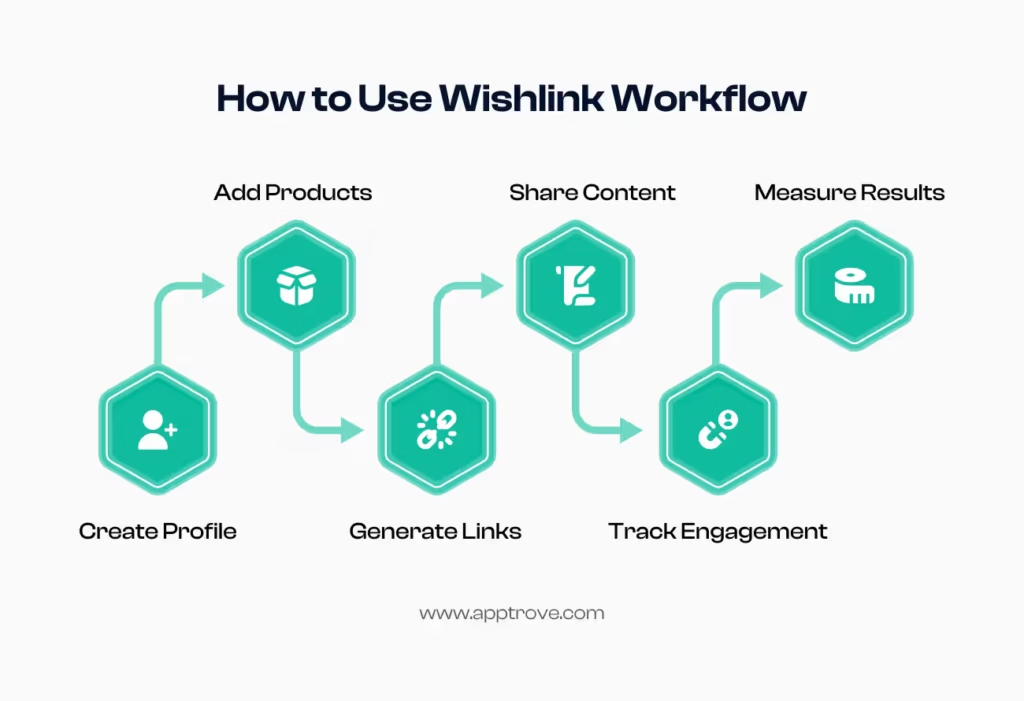
Creating a Wishlink Creator Profile
To start using Wishlink, you first need to create and optimize your profile as a creator. Your profile is a central hub for audiences to find your curated product recommendations and all of the items you feature in your content as a creator.
A good profile will accurately reflect your niche, content style, and the interests of your audience; therefore, when you are consistent across all of the different social platforms you use, you will be able to improve the recognition of your content and provide a more fluid experience for your followers as they navigate between your content and their commerce destination on Wishlink.
Brands can use a creator’s profile to understand audience preferences, product categories, and overall alignment with the creator’s content before entering into a partnership.
How to Create Product Collections
Wishlink creators can create organized collections of products using curated collections as a way to share their suggested products with an audience. Creating collections allows creators to present related recommendations in collections instead of just posting individual product links in each of their posts.
Examples of collections might include:
- Clothing essentials
- Skincare
- Travel Ideas
- Home decor
- Electronics Accessories
Consistently presenting products within a collection will enhance the experience of the consumer as they explore through an organized structure to more easily identify products and increase the possibility of trying out numerous recommendations rather than focusing on just one.
Sharing Links Across Social Platforms
After creating product collections, creators can distribute links across various social media channels. This allows audiences to move seamlessly from content consumption to product exploration.
A Wishlink creator may share links through:
- Social media bios
- Video descriptions
- Stories
- Community posts
- Product recommendation content
The goal is to reduce friction between discovery and action. The fewer steps users must take to find recommended products, the more likely they are to engage with the shopping experience.
For brands, this creates multiple opportunities to reach consumers throughout different stages of the customer journey while maintaining a consistent creator-led experience.
Tracking Creator Performance
Understanding performance is a critical part of learning how to use Wishlink effectively. While content engagement remains important, successful creator campaigns require deeper visibility into business outcomes.
Brands and creators often evaluate performance using metrics such as:
- Link clicks
- Audience engagement
- Website visits
- Product views
- Conversion rates
- Revenue contribution
As creator-led commerce grows, brands increasingly need visibility into what happens after a user clicks a creator link. This is where attribution and measurement solutions become essential for understanding campaign effectiveness. By connecting creator activity with measurable outcomes, marketers can gain a clearer understanding of which partnerships are driving meaningful results and which strategies require optimization.
Best Practices for Brands Working With Wishlink Creators
Successful creator collaborations go beyond simply providing products and expecting results. Brands should focus on building long-term partnerships that allow creators to communicate authentically with their audiences.
Some best practices include:
- Prioritizing audience relevance over follower count.
- Giving creators creative flexibility.
- Establishing clear campaign goals.
- Tracking performance through measurable KPIs.
- Using mobile attribution and analytics to understand campaign impact.
- Building ongoing relationships rather than one-time collaborations.
When brands combine authentic creator partnerships with strong measurement frameworks, they can create more sustainable and effective creator marketing strategies.
Key Takeaway: Learning how to use Wishlink effectively involves more than sharing product links. Success comes from combining creator content, audience engagement, performance tracking, and attribution-driven measurement to understand what truly drives results.
Social Media Influencer Marketing Attribution: The Missing Piece Most Brands Ignore
As Influencer Marketing continues to mature, brands are becoming increasingly focused on performance and accountability. While creator partnerships can generate impressive engagement and visibility, many marketers still struggle to answer a critical question: Which creator activities are actually driving business results?
The challenge isn’t a lack of content or audience reach. It’s a lack of attribution. Without proper measurement, brands often rely on surface-level metrics that fail to reveal how creator campaigns contribute to conversions, app installs, purchases, and customer growth. This is why attribution has become one of the most important components of modern creator marketing strategies.
Why Vanity Metrics Are No Longer Enough
For years, marketers measured creator campaigns using metrics such as likes, comments, shares, views, and follower growth. While these indicators can help evaluate audience engagement, they do not always reflect business impact.
A post may generate thousands of likes yet contribute very little to actual conversions. Conversely, a creator with a smaller audience may drive significant purchases, app installs, or customer sign-ups.
As marketing budgets become increasingly performance-focused, brands need deeper visibility into the actions users take after engaging with creator content. Understanding what happens beyond engagement metrics is essential for making informed investment decisions and optimizing future campaigns.
Understanding Creator Attribution
Creator attribution is the process of identifying how creator-driven interactions contribute to customer actions. It helps marketers understand whether a specific creator, campaign, or piece of content influenced a conversion event.
Rather than evaluating creators solely on visibility metrics, attribution focuses on measurable outcomes such as:
- Website visits
- Product views
- App installs
- Lead generation
- Purchases
- Customer retention
By connecting user actions back to creator activity, brands can better understand the true value of their creator partnerships and make data-driven decisions about future collaborations.
Measuring Clicks, Installs, Purchases, and Engagement
Every creator campaign generates multiple touchpoints throughout the customer journey. A user may click a creator link, browse products, leave without converting, return later through another channel, and eventually complete a purchase.
To accurately evaluate campaign performance, brands should track metrics across the entire funnel, including:
- Link clicks
- Landing page visits
- Engagement metrics
- App downloads
- Product purchases
- Revenue contribution
Many marketers also use deep linking to create seamless user experiences between creator content and destination pages. By directing users to specific products, app screens, or promotional experiences, deep links help reduce friction and improve conversion opportunities while supporting more accurate campaign measurement.
Attribution Challenges in Creator Campaigns
Despite growing interest in creator measurement, attribution remains one of the most complex aspects of Social Media Influencer Marketing.
Modern customer journeys often involve multiple touchpoints. A user may discover a product through one creator, research it through search engines, revisit it through social media, and finally convert after receiving an email promotion.
This complexity creates challenges such as:
- Cross-channel interactions
- Multi-device behavior
- Delayed conversions
- Incomplete tracking data
- Multiple creators influencing a single purchase
Without a reliable measurement infrastructure, it becomes difficult to determine which touchpoints contributed most significantly to the final conversion.
Why Measurement Creates Better Creator Partnerships
Accurate measurement benefits both brands and creators. When campaign performance is clearly understood, brands can identify high-performing partnerships, allocate budgets more effectively, and optimize future strategies.
Creators also benefit from performance transparency. Rather than being evaluated solely on audience size or engagement rates, they can demonstrate their ability to drive meaningful business outcomes.
This shift encourages stronger, long-term partnerships built on measurable value rather than assumptions.
Connecting Creator Platforms With Attribution Tools
As creator commerce grows, the need for integrated measurement solutions becomes increasingly important. Campaign tracking, attribution, analytics, and reporting infrastructure help connect creator activity with business performance.
For brands running creator campaigns through platforms such as Wishlink, integrating creator activity with an attribution solution can provide a clearer view of performance, helping marketers understand which creators drive meaningful business outcomes.
By combining creator-generated traffic, deep linking, campaign tracking, and attribution technology, brands gain a more complete understanding of the customer journey. This enables smarter decision-making, more efficient budget allocation, and stronger creator partnerships that are backed by data rather than guesswork.
Ultimately, the future of Social Media Influencer Marketing will belong to organizations that can not only create engaging creator campaigns but also accurately measure the impact those campaigns have on business growth.
Future Trends Every Social Media Influencer and Brand Should Watch
The creator economy is evolving at an extraordinary pace. Goldman Sachs Research estimates that the creator economy could nearly double in size, growing from about $250 billion in 2023 to $480 billion by 2027. What started as a content-driven ecosystem has transformed into a sophisticated marketing channel that influences awareness, engagement, commerce, and customer acquisition. As consumer behavior continues to shift, both brands and creators must adapt to emerging technologies, changing privacy regulations, and new measurement expectations.
For any social media influencer or marketer investing in Social Media influencer marketing, understanding these trends can help you stay ahead of industry changes and build more effective creator strategies in the years ahead.
AI-Powered Creator Discovery
Finding the right creator has traditionally been a time-consuming process involving manual research, audience analysis, and performance evaluation. However, artificial intelligence is changing how brands discover and evaluate creator partnerships.
AI-powered tools can analyze audience demographics, engagement patterns, content relevance, brand alignment, and campaign performance at scale. This enables marketers to identify creators who are more likely to achieve specific campaign objectives while reducing the risk of poor partnership decisions.
As AI capabilities continue to improve, creator discovery is expected to become faster, more data-driven, and increasingly predictive.
Creator Commerce Expansion
The line between content consumption and shopping continues to blur. Consumers are increasingly comfortable discovering and purchasing products directly through creator recommendations, making creator commerce one of the fastest-growing segments within the digital economy.
Platforms that support product discovery, affiliate recommendations, and social commerce experiences are creating new monetization opportunities for creators while helping brands reach consumers in more authentic ways. As this trend accelerates, creator-led purchasing journeys are likely to become a standard component of modern marketing strategies.
Performance-Based Influencer Marketing
Brands are moving beyond awareness-focused campaigns and placing greater emphasis on measurable outcomes. Instead of evaluating creators solely through reach and engagement, marketers increasingly expect campaigns to contribute to specific business goals such as app installs, lead generation, purchases, and customer retention.
This shift is driving the growth of performance-based Social Media Influencer Marketing, where success is tied to measurable results rather than visibility alone. As attribution capabilities improve, performance-driven partnerships will become more common across industries.
First-Party Data and Privacy
Privacy regulations and changing platform policies are reshaping the digital marketing landscape. As third-party tracking becomes more limited, brands are placing greater importance on first-party data strategies.
For creators and marketers, this means focusing on consent-based audience relationships, transparent data practices, and privacy-compliant measurement approaches. Organizations that effectively leverage first-party data will be better positioned to understand customer behavior while maintaining trust and regulatory compliance.
Attribution-Driven Creator Partnerships
The future of creator marketing will be increasingly data-driven. Brands want to understand not only who engages with creator content but also which creators influence meaningful business outcomes.
Attribution-driven partnerships allow marketers to connect creator activity with website visits, app installs, conversions, purchases, and revenue. This deeper level of insight helps brands optimize budgets, improve campaign performance, and build stronger creator relationships based on measurable value.
As the creator economy continues to mature, attribution will become a core component of successful creator strategies rather than an optional reporting layer.
Key Takeaway: The future of the creator economy will be shaped by AI-powered discovery, expanding creator commerce, privacy-first measurement, and attribution-driven decision-making. Brands and creators that embrace these changes will be better equipped to drive sustainable growth in an increasingly competitive digital landscape.
Conclusion: Social Media Influencer Marketing Is Becoming a Measurable Growth Channel
The creator economy is no longer driven solely by visibility, engagement, or follower counts. A Social Media Influencer Marketing continues to evolve, and brands are shifting their focus toward measurable outcomes that contribute directly to business growth. Today’s creator partnerships influence every stage of the customer journey, from discovery and consideration to conversions and long-term customer loyalty.
At the center of this transformation are platforms that help creators connect content with commerce. A Wishlink creator can now do far more than recommend products—they can help brands generate meaningful engagement, drive purchasing decisions, and create seamless shopping experiences for their audiences.
However, successful creator campaigns require more than authentic content. As competition increases and marketing budgets become more performance-driven, measurement is becoming essential. Brands need visibility into clicks, installs, purchases, and customer actions to understand what truly drives results. This is where mobile attribution and campaign measurement play a critical role in connecting creator activity with business outcomes.
The future of creator-led growth will belong to organizations that combine strong creator partnerships with data-backed decision-making. By investing in attribution, analytics, and performance measurement, you can move beyond vanity metrics and build creator strategies that deliver sustainable growth.
To learn more about attribution-driven marketing and mobile measurement, explore the Apptrove. If you’d like to discuss creator campaign tracking, attribution, or measurement strategies, visit our page and connect with the team.
FAQs
1. What makes a social media influencer effective in niche markets?
A niche social media influencer often builds stronger audience trust through specialized content, making recommendations feel more authentic. This can result in higher engagement, better audience relevance, and stronger conversion rates than broader campaigns.
2. Why is creator commerce becoming an important part of Influencer Marketing?
Creator commerce shortens the distance between content and purchase decisions. Instead of only generating awareness, creators can now directly influence transactions through curated recommendations, affiliate links, and integrated shopping experiences.
3. How do brands evaluate the long-term value of a Wishlink creator partnership?
Beyond immediate sales, brands should assess audience quality, engagement consistency, repeat purchases, customer retention, and overall contribution to broader marketing goals when evaluating a creator partnership.
4. When should a brand prioritize attribution in Influencer Marketing campaigns?
Attribution becomes particularly important when multiple creators, channels, and campaigns influence customer decisions. It helps brands identify performance drivers and allocate marketing budgets more accurately.
5. What role will first-party data play in the future of creator marketing?
As privacy regulations evolve, first-party data will help brands better understand customer behavior while maintaining compliance. This data can improve audience targeting, campaign optimization, and creator partnership decisions.
from Apptrove https://apptrove.com/social-media-influencer-marketing-guide/
via Apptrove


Comments
Post a Comment