What Is Beta Testing?
Beta testing is the final stage of software verification, in which a prototype of the product is tested under real-world conditions by a specific group of users from outside the organisation rather than by the internal testing unit. Unlike the earlier stages of software testing, which are conducted under lab conditions, beta testing evaluates how the product works in real-life situations, taking into account the technology it runs on, as well as the operating system and environment it uses.
Beta testing is an outsourced acceptance testing used to determine whether the product is functionally ready for launch and to gather honest feedback from those who will use it. Beta testing has evolved beyond the software domain.
Why It Matters More Than Ever
The new products function in an incredibly fragmented environment. For instance, a mobile application must support many device models, operating systems, network regions, accessibility features, and mobile usage without a single device being tested in the laboratory.
Here is where beta testing comes into play. Instead of the tested assumptions, organisations are able to see how their clients use their products in the real world.
According to statistics:
- More than 70% of defects in the product get discovered after deployment if user validation is not included.
- Around 88% of clients are likely not to come back to the software after they encounter bugs for the second time.
- Companies that involve end users in product validation tend to achieve better adoption of the features and lower customer support costs after the launch.
- Modern beta testing provides an opportunity to validate usability, performance, onboarding, feature discoverability, and customer expectations.
Types of Beta Testing
Closed Beta
Only invited users, customers, partners, or power users are allowed in this phase. They offer limited feedback and help safeguard features that are not yet released.
Open Beta
All interested individuals can join in this phase. This approach helps generate larger datasets and puts products through varied technology, geographical locations and usage patterns.
Technical Beta
In this case, teams are more focused on stability and compatibility issues rather than just on user experience.
Marketing Beta
This method can not only generate feedback but also create buzz, cultivate communities, collect testimonials, or prepare for a product launch.
Insights on Beta Testing That Are Rarely Mentioned
Most of the literature on beta testing revolves around the topic of “bug finding”. Mature teams are capable of evaluating more sophisticated signals. Silent Failures Are More Important Than Reported Bugs
Experienced teams are often more concerned about what hasn’t been reported by the users, for example:
- Features that have been totally ignored by the users;
- Screens that have been closed in the middle;
- Permissions that haven’t been approved;
- Workflows that have not been completed.
- All these behaviours can reveal more serious issues than the bugs that were reported.
Behavioral Analytics Is Becoming a Core Metric
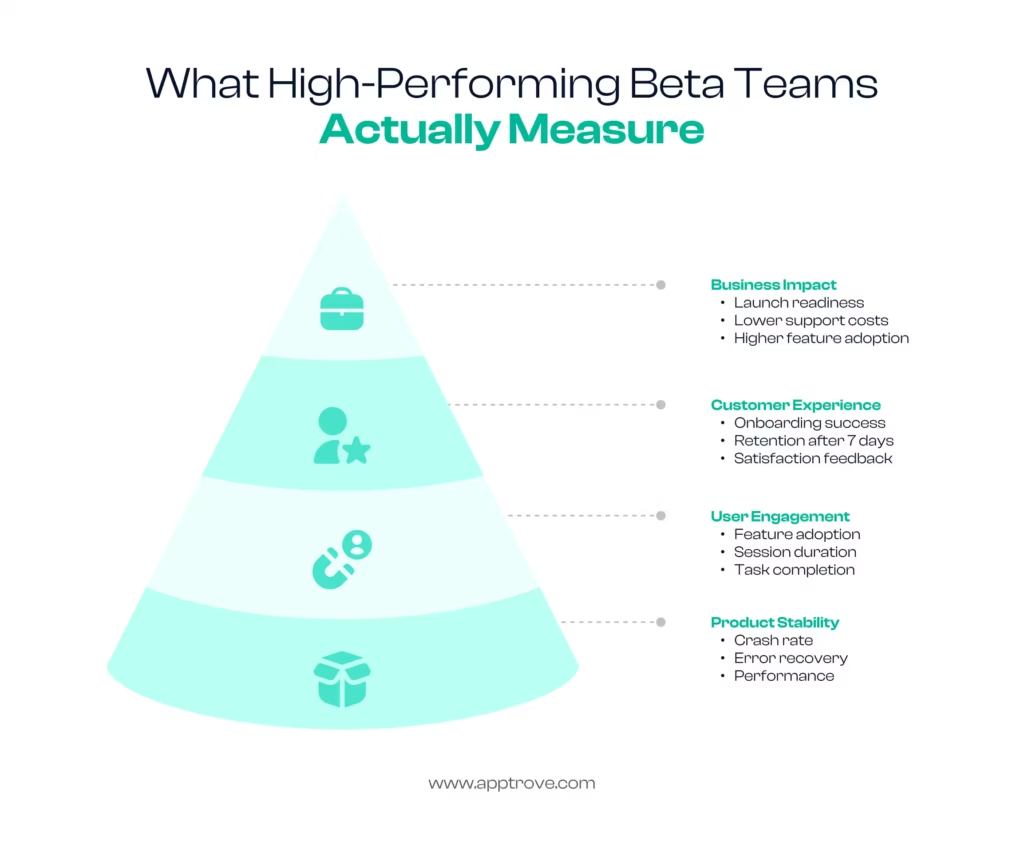
Today’s beta programs incorporate survey data in conjunction with measures such as:
- Usage rates of specific features
- Successful completion of tasks
- Sessions‘ duration
- Crash rates
- Time taken for recovering from an error
- Retention rate after 7 days
These metrics reveal the product manager’s ability to know if the product is capable of creating value for users on its own.
Geographic Diversity Contributes to the Improvement of Great Products
A large opinion poll conducted with over 600,000 respondents proved that beta testers resemble the mass user base in the choice of devices and operating systems, while they differ in many aspects, such as area of residency, locality, and so on. Therefore, differences concerning localization, language, payment systems, and user behavior in specific regions can be missed, and this can happen because of the lack of geographical diversity in the recruitment process.
Prioritizing Feedback Is More Important Than Accumulating Feedback
Getting a list of hundreds of suggestions does not guarantee improved quality of the product.
The leading companies manage all the received feedback by classifying it into the following groups:
- Problems that kill the product
- Usability issues that occur most frequently
- Potentially problematic aspects of the product’s performance
- Requests for specific features
- Long-term improvements needed to make the product better
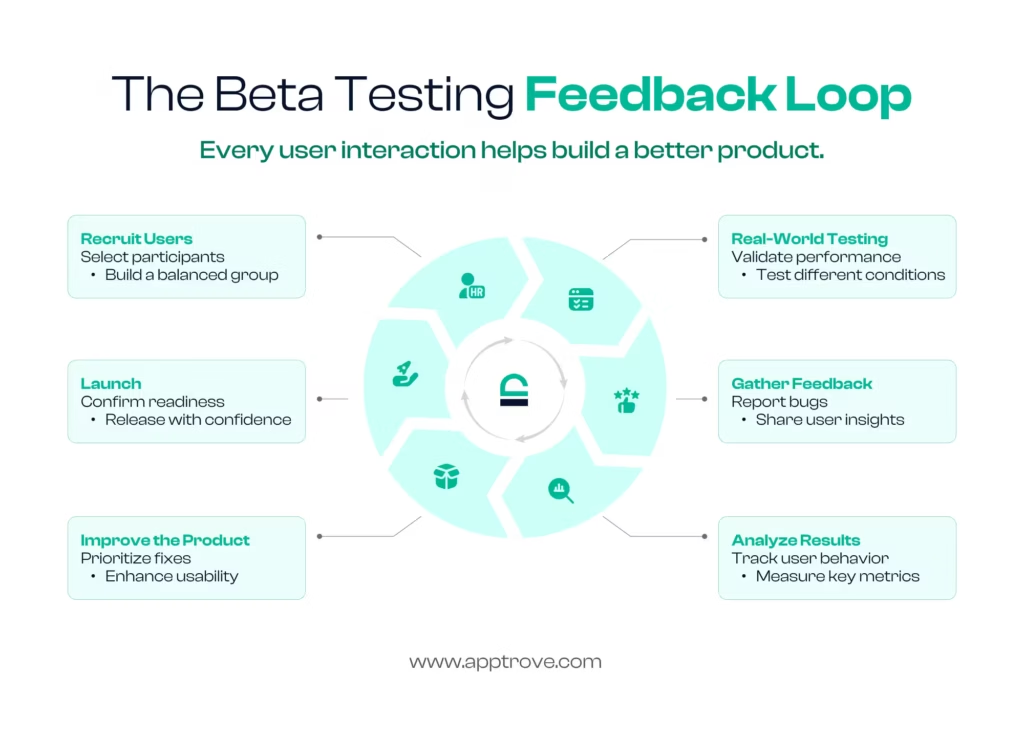
The Modern Beta Testing Workflow
Planning
Teams come up with metrics for success, find representative users, put together any necessary materials for documents, and set up reporting channels.
Staged Release
The product is made available to users outside the organization by means of invitation codes, feature flags, selective distribution, or limited geographical release.
Collection of Relevant Data
The marketing department gathers qualitative and quantitative data from several sources, including surveys, interviews, analytics dashboards, crash logs, widgets, and communication with customers.
Analysis of Data
The team working on development evaluates the messages according to such parameters as importance, consequences for business, possibility for reproducing the fault, and degree of usefulness to clients.
Effectiveness of the Release
A product goes through a process of assessment against the previously set criteria before release.
Best Practices Of Beta Testing
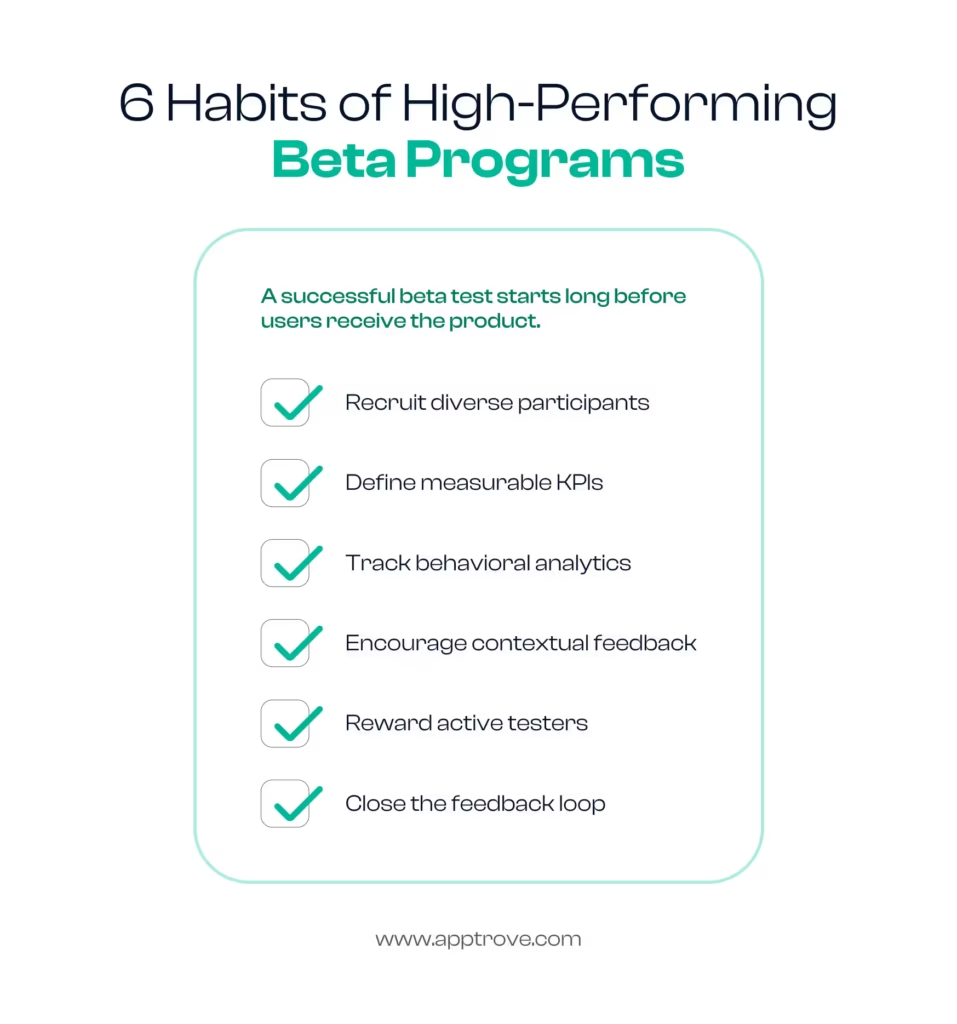
Successful organizations conducting beta tests are usually characterized by several effective methods:
Be Open to the Variety of Users
Make sure that users belong to different groups, use different devices, come from different places, and have different backgrounds.
Set Measurable Criteria for Success
Instead of merely asking users whether they liked your developed solutions, be clear about what you want to accomplish during testing – for example, avoid crashes, get users accustomed to new features, and learn how many users rated your product favourably.
Help Users Give Comments in Real Time
Ask users about what they wanted to achieve when they encountered any problem with your product. Context can often tell you more than screenshots.
Reward Contributions
Users can be encouraged to do their best in testing the developed solution by providing them with various incentives like compliments, open access to the use of the newest version of the product, a chance to become a part of an exclusive community, a certificate, or premium access.
Complete the Cycle
People take part in the process when they know that their recommendations have been implemented.
To Wrap It Up
The field of artificial intelligence is transforming product validation. With the use of artificial intelligence-powered instruments, analysis can cluster similar feedback automatically, foresee problems, recognize abnormal behavior, summarize thousands of reports, and give recommendations on releases.
At the same time, due to feature flags, continuous deployment, and cloud facilities, beta testing has been turned from a single event to a strategy of continual product improvement. Several software-as-a-service companies conduct continuous validation of their new features among limited clients before launching the products worldwide; thereby, the level of releasing risks is reduced along with the speed of innovation.
As software systems become more personalized and AI-driven, organizations that view user feedback as a continuous competitive edge instead of a checklist will create more reliable and intuitive products.
FAQs
1. What is beta testing in software development?
Beta testing is the process of releasing a nearly finished product to real users outside the development team to identify usability issues, compatibility problems, and remaining defects before public release.
2. What is the difference between alpha testing and beta testing?
Alpha testing is performed internally by developers and QA teams in controlled environments, whereas beta testing involves external users evaluating the product under real-world conditions.
3. Who should participate in a beta program?
The ideal participants include target customers, power users, industry experts, enterprise clients, and users with diverse devices, operating systems, and technical backgrounds.
4. How long should a beta testing phase last?
Most beta programs run between two and eight weeks, depending on product complexity, user volume, release goals, and the amount of feedback required.
from Apptrove https://apptrove.com/what-is-beta-testing-definition-and-all-details/
via Apptrove


Comments
Post a Comment