How to Resolve App Store (Android/iOS) and Apptrove Discrepancies?

When analyzing mobile acquisition statistics, one of the first things to become confusing is that statistics do not always match. For example, an app store may state a certain number of app installs while the attribution platform (for example, Apptrove) provides another number. At first glance, this discrepancy makes it look like there is a problem with tracking or that there was an error in reporting and that something went wrong with an advertising campaign.
In reality, discrepancies between app store data and attribution platforms happen quite often. These two systems can collect, categorize and report user activity in a different manner. For instance, the term “install” might refer to different processes in different systems. Besides, there are some other factors, such as time zones, application updates and device IDs, that influence the statistics that you observe.
Marketers should be aware of these differences in order to analyze the performance of their acquisition processes in an appropriate way. Instead of regarding every difference between statistics as an issue, it is more efficient to know why this situation happened and what reporting principle it is based on.
What Are Attribution Discrepancies?
Attribution discrepancies arise when attribution numbers reported by an attribution partner such as Apptrove differ from those reported by an application store.
An example would be when an app store registers an installation when a user downloads and installs the application, as opposed to how Apptrove registers the installation when the user launches the application for the first time. If a user downloads an application but opens it later, the two platforms will associate this behavior with different dates. This doesn’t mean either of them is incorrect; what it means is that each platform is simply approaching the matter from a different perspective.
Why do Attribution Numbers Differ?
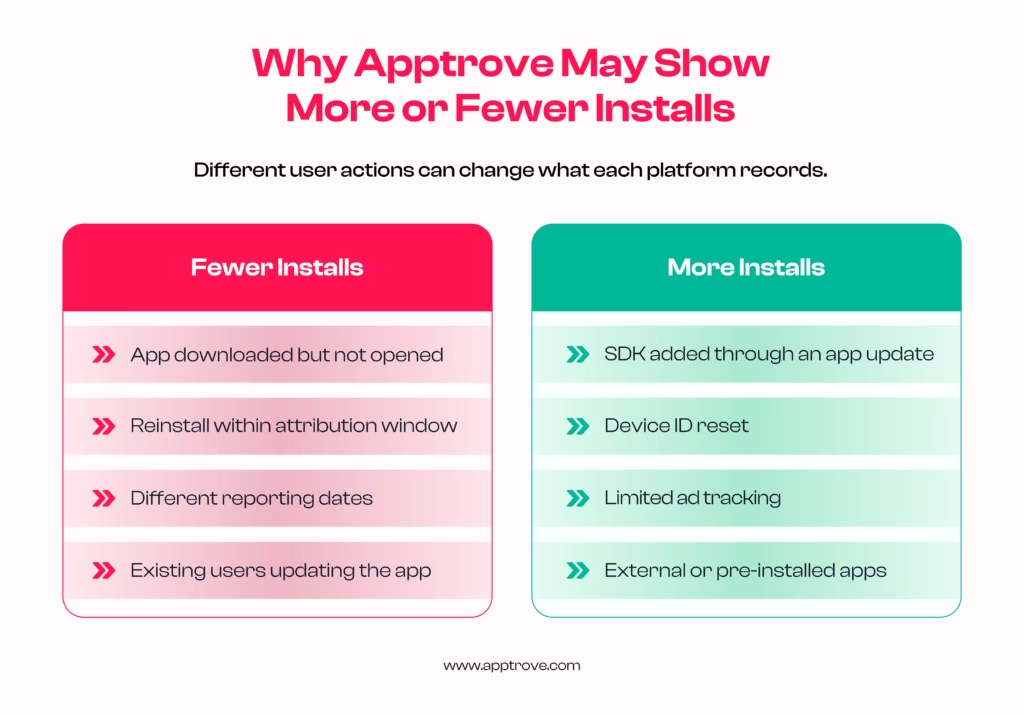
Understanding why attribution numbers are different can be done easily by keeping in mind the intended functions of an app store versus that of an attribution platform; the former is generally about deploying applications and recording installations, whereas the latter is meant to track user acquisition and attribution.
Therefore, differences can arise from multiple causes like install definitions, dates of reports, time zones, versions and reinstallations, device IDs, and installs made from outside stores. This can be considered normal and even be beneficial to marketers, as it can lead them to investigate their data more deeply rather than relying on a mere figure.
Taking into consideration the importance of the secret key in the Google Play Console. The importance of the secret key is that a difference in fraud metrics might occur if it hasn’t been activated for all versions of an app.
In order to minimise this discrepancy, the secret key should be enabled for each version of the application so that they don’t use the same key but a different one.
Reasons for Apptrove to show Fewer Attributions.
There are several reasons why Apptrove can show fewer attributions in comparison to the app store. It all depends on the fact that every platform interprets the meaning of install and the time of registering the install differently.
App Updates Can Change the Numbers
In the scenario where the user installs a version of an application that does not have the Apptrove SDK, and updates to a version that has the SDK, the app store would still recognize the user as the same person.
However, Apptrove would count that installation as an organic install, as the Apptrove SDK is active when the updated version is launched; thus, there is a difference in numbers in the reports generated by Apptrove in the situation.
In such cases, it is suggested to consider re-attribution or re-engagement as a way instead of treating it as an installation attribution.
The definition of an installation is different in the views of the App Store and Play Store
The installation in the App Store and the Play Store is counted when the application has been downloaded and installed, regardless of whether it has been opened by the user or not.
The application Apptrove tracks an installation once the application is launched for the first time. To clarify, if a user downloads the app but doesn’t actually use it, the app store might show that the application was installed; however, Apptrove won’t count it as an installation.
This is the reason behind why having users open the application right after installation is a good way to make sure that the installation is tracked accurately.
Dates for Installations Can Differ
The date of installation can lead to discrepancies as well. As far as app stores are concerned, the date of installation is when the app is downloaded. Apptrove records the installation date as when the application is launched for the first time.
For example, if a customer downloads the app on Monday but only uses it on Wednesday, the app store will have this installation recorded on Monday while Apptrove will note it on Wednesday. This makes comparing daily reports troublesome, as the numbers may seem to be different even though both of the systems are functioning properly and following their rules accordingly.
Using a larger date range when querying data in Apptrove can help reduce the impact of this timing difference.
Time Zones Can Shift Reporting
Time zones are another simple factor that can cause considerable differences. The app store will show information according to the time zone of the advertiser, while Apptrove will provide information based on the user’s chosen time zone.
This means that an event occurring shortly before midnight may appear on either of the two platforms as different dates. Setting a time zone for the app may help eliminate such issues.
Reinstalling on Android
When it comes to Android, the App Store and Apptrove have different views on reinstallations. The App Store counts every install when the app was both uninstalled and then reinstalled in the time frame which is relevant to the re-attribution period. Apptrove does not count reinstallations that took place in its re-attribution windows.
The re-attribution window is commonly set at a time frame of three months, but it may be set from 1 to 24 months. Thus, marketers need to choose the right timeframe depending on their measurement purposes, as this will have an impact on the way reinstallations are treated in the attribution reporting.
iOS Reinstallations Within the Re-Attribution Window
Likewise, behavior changes on iOS. Each time a user reinstalls an application, the app store logs it as a fresh installation. Apptrove does not count reinstalls when they take place within the reattribution window.
As is true for Android, marketers should set the reattribution window based on their analytical needs rather than assuming that each reinstall represents a new acquisition.
Why Does Apptrove Have More Attributions?
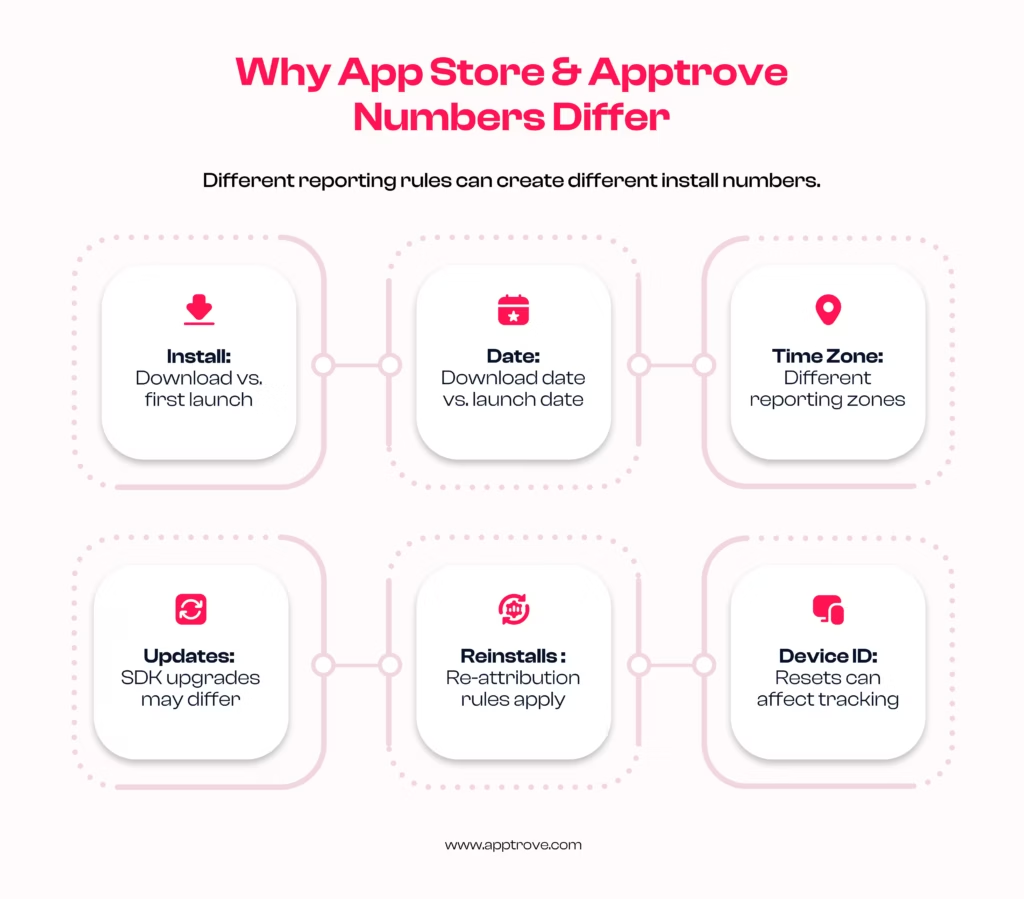
Conversely, Apptrove might report more attributions than the app store. Possible scenarios include when users migrate from older versions of an app without the Apptrove SDK to an updated version featuring the SDK, when device identifying information gets reset, or when the app is installed through methods besides official app stores.
Current Users Moving to a Version Featuring the SDK
Let’s take an example of an app that initially did not have the Apptrove SDK. Current users can keep using it without attracting the attention of Apptrove.
Even if those users upgrade to a version featuring the Apptrove SDK, the app store will still classify them as existing users. When registering a device on its platform, the store does not take into consideration whether its app has the latest version or not.
At the same time, Apptrove will track this process as a new installation because it is the moment when the SDK is activated and starts tracking the user’s actions.
This sharp rise in the number of installations from Apptrove, however, will not last long. After the users install the new version, the number of installations decreases. The same transition allows former users to become tracked with the help of Apptrove without going through the whole process of acquiring the new users.
Resetting Device ID and Advertising Limitations.
The process of distinguishing customers can be another reason why the number of installations at the app store differs from that at the attribution platform.
The store will regard the same customer as a new one if his/her device identifier was reset after the user started using the app. Meanwhile, Apptrove will see it as a new installation even if the device ID was reset
Preventing fraud is very important here as well. The Apptrove Anti-Fraud Tool can be used to guard applications against various kinds of fraudulent actions so that no suspicious actions influence acquiring metrics in any way.
Installation of applications not from authorized stores
It is not always true that each application has been installed from authorized app stores. An application can be distributed through another channel or even pre-installed on the device. Google Play does not consider these situations in the same way as it counts downloads that come from its store.
Nevertheless, these cases can be recorded by Apptrove, which can result in a higher number of installations.
This situation is very relevant for marketers who promote applications outside authorized stores. Teams should be aware of the influence that the distribution channel can have on measurements before they make any comparisons.
How can discrepancies in attribution be reduced?
One definitely cannot get rid of all the discrepancies between an app store and attribution platform as they may measure different things on purpose, but at least one can achieve a more meaningful comparison of these systems with a good understanding of their definitions and effective configuration of measurement settings.
Begin by identifying how each service defines and counts an install. If one service counts downloads but another counts first launches, the resulting daily figures will differ as well.
Next, check the reporting time zones of various services. A discrepancy in time zones can move the date of an event record to another date, especially when activity occurs around midnight.
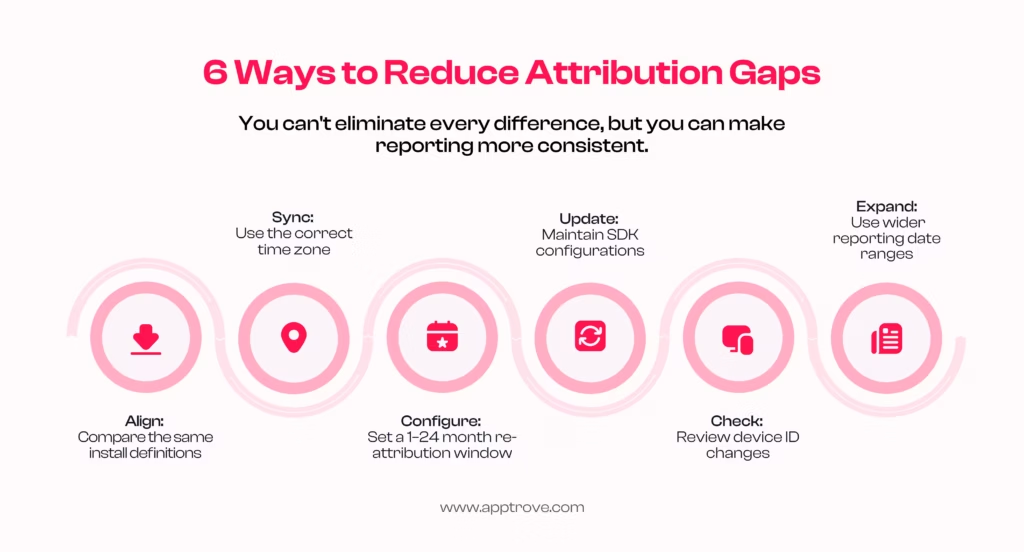
Then pay attention to the reattribution window in the campaign. Reinstalls in Android and iOS may be treated differently, and the window must allow you to measure returning users according to your preference.
As for apps moving from versions without Apptrove SDK to versions that support it, pay attention to a temporary spike in recorded installs caused by upgrading users to the version with the SDK installed.
Finally, check the method of acquisition. If the app installation happens through pre-installations and not through the official stores, this means that the data for the app store may be recorded differently than for Apptrove.
Once the definitions are clear, examine the reporting period and time zone. Then check whether users upgraded from versions without the Apptrove SDK, whether device IDs were reset, and whether the application was distributed through channels outside the official stores.
The goal is to understand the reason behind the difference rather than simply trying to force both platforms to display identical numbers.
Build a Consistent Reporting Framework
For long-term analysis, marketers should establish which platform is used for which measurement purpose. Store reporting can provide useful information about distribution and download activity, while an attribution platform can provide deeper insight into first launches, acquisition sources, re-attribution, and campaign performance.
Using consistent definitions within internal reports makes it much easier to identify genuine performance changes.
Look at Trends Instead of One-Day Differences
A single day’s data can be distorted by installation timing, time zones, delayed first launches, and other factors.
Looking at larger date ranges can provide a more reliable view of overall acquisition performance. This is particularly useful when comparing store data with Apptrove data because downloads and first launches may occur on different dates.
Conclusion
Attribution discrepancies are not necessarily a sign that your measurement system is broken. More often, they are the result of two platforms looking at the same user activity through different lenses.
An app store may focus on downloads and installations, while Apptrove can focus on application launches, attribution, and user activity. Add differences in time zones, app upgrades, reinstallations, device IDs, SDK implementation, and distribution channels, and a perfectly reasonable gap between the numbers can emerge.
The real challenge is therefore not simply spotting that the numbers differ. It is understanding why they differ.
Once marketers understand the definitions and reporting logic behind each platform, they can interpret acquisition data more accurately, investigate unusual changes with greater confidence, and make better-informed optimization decisions. In mobile marketing, the number itself is only the beginning—the real value comes from understanding the story behind it.
FAQs
1. Why does my App Store data not match Apptrove?
The app store and Apptrove can use different definitions, data collection methods, reporting dates, time zones, and attribution rules. For example, the store may count a download as an install, while Apptrove records the installation after the user’s first launch.
2. Why can Apptrove show fewer installs?
Apptrove may report fewer installations because it records an install when the user launches the application for the first time. Users who download an application but never open it can therefore appear in store data without appearing as installs in Apptrove.
3. Why can Apptrove show more installs?
Apptrove can report more installations when existing users upgrade from a version without the Apptrove SDK to one containing the SDK, when device identifiers are reset, or when installations occur through channels outside official stores.
4. Can time zones cause attribution discrepancies?
Yes. If the app store and Apptrove use different time zones for reporting, the same installation or event can appear on different dates. Configuring the app’s preferred time zone can help reduce this difference.
from Apptrove https://apptrove.com/how-to-resolve-app-store-and-apptrove-discrepancies/
via Apptrove


Comments
Post a Comment