What is User-Generated Content?
All brands have a story to tell. Nowadays, consumers are not only interested in hearing a story but in seeing it as well from actual people. This is why user-generated content has emerged as one of the most powerful marketing tools for businesses of all types. Brands no longer rely solely on attractive ads; they leverage customers’ real experiences to build trust, attract more customers, and increase sales.
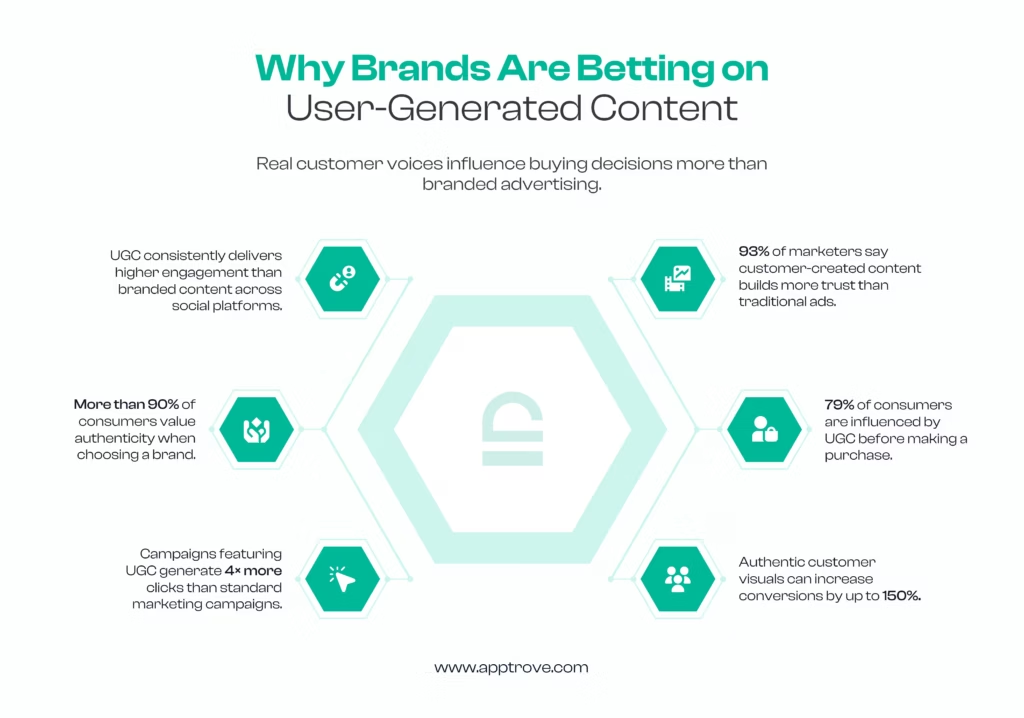
If you are looking for evidence that the influence of user-generated content cannot be neglected, here are some statistics. Almost 93% of marketers say that customers trust user-generated content more compared to traditional advertising methods. About 79% of people say that user-generated content influences them when making purchasing decisions. Even more impressive, campaigns that use user-generated content generate 4 times more clicks than other campaigns.
Seth Godin, a marketing guru, said somewhere:
“People don’t buy goods and services. They buy relations, stories, and magic.”
One can assume that the consumers themselves often generate this magic
In this article, we will define what user-generated content is, why it’s important, what types of user-generated content exist, and how to do it
The definition of User-Generated Content
Content produced by users which is rather than the company, such as customers, fans, or the local community than the company is called user-generated content (UGC).
The following types of content can be classified as UGC:
- Social media posts
- Product reviews
- Testimonials
- Videos
- Photos
- Articles in blogs
- Discussions in communities
- Unboxing videos
- Tutorials
- Case studies
Ratings and Recommendations
The main thing is simple: UGC content is made voluntarily by real users based on their experience.
UGC is different from marketing materials as the content is created by ordinary users rather than brand marketers; i.e., UGC is more authentic for potential buyers because they feel more inclined to trust honest opinions.
Now companies in virtually every industry, be it eCommerce, SaaS, Travel, Gaming, Healthcare, Education or Finance, invite their customers to share their experiences because authentic recommendations are considered to be more effective than any paid campaigns.
The Importance of User-Generated Content
Modern consumers are wary of polished advertising materials.
They need evidence. They need experiences. They need opinions from people similar to them. And that’s what user-generated content can provide. Creates Instant Trust
Consumers are likely to rely on the recommendations of their peers.
Boosts Conversion Rates
When individuals observe a product’s actual users, their level of uncertainty decreases.
Brands that use authentic images and consumer feedback have higher chances of increasing conversion rates by up to 150% or more, depending on the industry.
Consumers are much more confident when they are aware that someone has already made a purchase of the item.
Provides Social Proof
People are inclined to conform to what others do.
When many hundreds or even thousands of people give positive feedback about a product, people view this product as reliable.
The term “social proof” designates a well-known psychological principle and one of the most powerful tools for persuasion in marketing.
Cuts Content Production Costs
Video production, photo shoot creation, and advertising costs quite a bit.
Yet, daily, consumers produce new content themselves.
Taking advantage of customer-generated content minimizes production costs while enabling companies to develop their content strategy.
Enhances Community Engagement
Consumers like to be noticed.
Using customers’ contributions on their website or social networks helps to build relationships with customers and motivate more people to get engaged.
Communities built around the same experiences usually become strong supporters of the brand.
Types of User-Generated Content
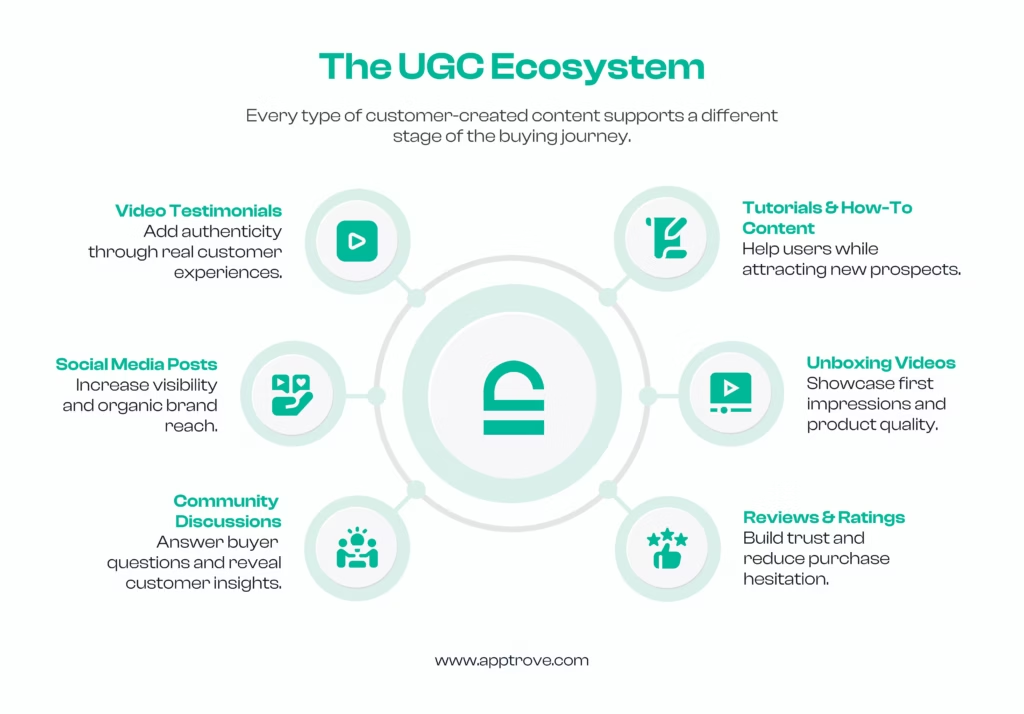
Not all user-generated content (UGC) appears identical. Different forms of UGC fulfil different functions in marketing.
Customer Reviews and Ratings
Reviews continue to be one of the most trusted kinds of customer feedback.
Whether found on an e-commerce website or a third-party site, reviews answer the questions that consumers want to know.
High-quality reviews typically talk about:
- Quality of the product
- Ease of use
- Customer service
- Delivery experience
- Long-term satisfaction
- Social Media Posts
- Pictures on Instagram
- Success stories on LinkedIn
- Challenges on TikTok
- Recommendations on Facebook
- Discussions on X
Conversations like these play a large role in determining how a brand is perceived.
Hashtag campaigns let users share their experiences while allowing firms to obtain useful content.
- Video Testimonials
- Videos help to engage emotions.
Watching facial expressions and listening to excited voices may create credibility that written reviews can hardly produce. Video testimonials have a great effect on landing pages and advertising.
- Unboxing Videos
- Unboxing videos have become popular worldwide.
- People enjoy videos that show:
- Quality of packaging
- First impressions
- Setting up the product
- Reactions to the product
- Accessories that are included
These real first-hand experiences help consumers make decisions about purchases.
Educational Videos and Instructions
Knowledgeable users often record videos explaining how to use a product in the best way possible.
Such videos not only help those users who are seeking answers to their problems, but they also attract new customers looking for a solution.
Online Conversations
Conversations on forum discussions, Reddit threads, Discord rooms, and Facebook fan pages can be helpful.
These discussions cannot only answer real customer questions but also show the great sides of your product as well as the areas that need improvement.
Benefits of User-Generated Content for Brands
User-generated content may be of more help than social media is believed to be.
Higher Engagement
Customer-generated posts tend to have higher engagement rates than any advertising.
It is easier to relate to something real than to perfect ad copy.
Better Positioning on Search Engine Results
In order to have better search engine positions, it is necessary to have new content all the time in the form of customer reviews.
It helps search engines to crawl the site and makes queries more diverse.
Continuous customer activity also helps product pages to remain up-to-date.
Increased Brand Reach
Each customer has their own set of followers.
Whenever users post about certain products, different brands can reach new audiences without spending more money on advertising.
One satisfied client can attract hundreds or even thousands of potential customers.
How to Gain Important Insights from Customers’ Posts
Customers’ posts provide insights on features that the clients loved, problems that they had, the changes that could be made to improve the product, and trends that recently appeared.
This information is considered to be vital for product development and future marketing campaigns.
Techniques to Encourage Users to Produce Content
Many happy customers would only need a little push.
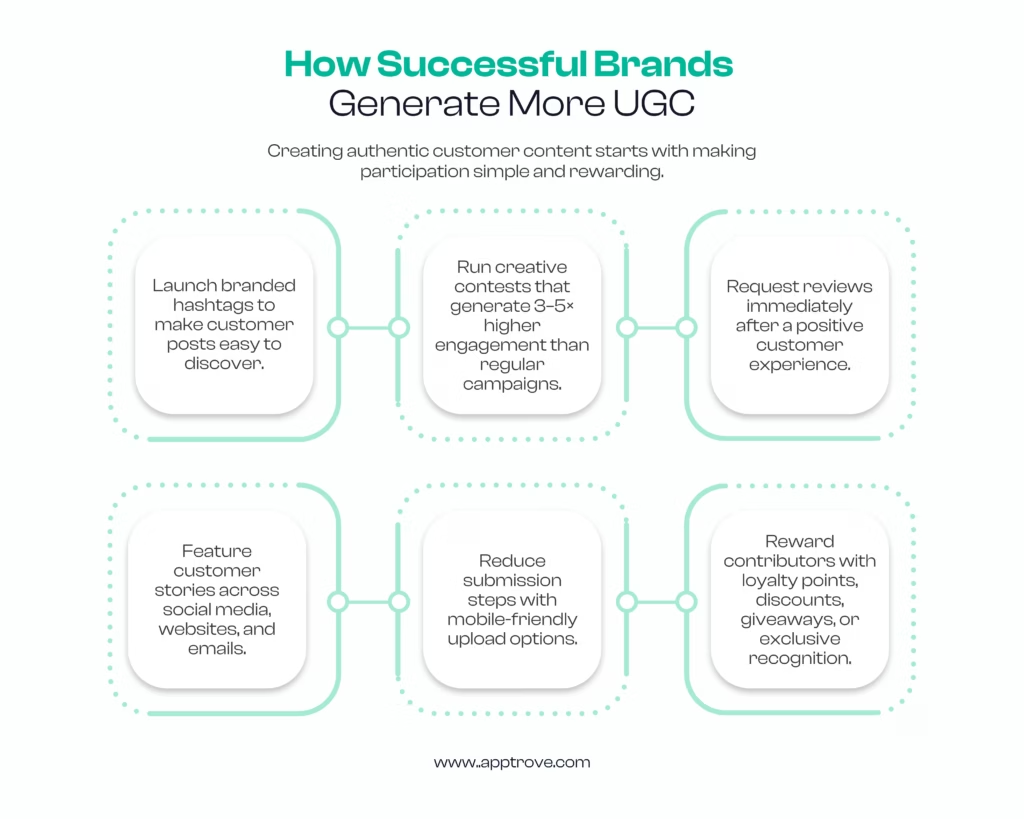
- Use Branded Hashtags
Easy and catchy hashtags will help people to engage and find the content more easily.
The simpler, the better.
- Hold Interesting Contests
Photo contests.
Video challenges.
Holiday campaigns.
Before and after photos.
All of these things boost activity and lead to a lot of interesting content being produced.
Focus on the creativity, not the perfection.
Feature Stories of Customers
Getting recognition inspires people to take part.
You can promote stories of your clients through:
- Social media
- Company blogs
- Email newsletters
- Pages about products
- Forums for the community
A lot of clients are glad simply to be mentioned.
- Make Sharing Easy
You should reduce barriers whenever it’s possible.
You have to provide:
- Direct uploading possibilities
- Buttons for sharing in social networks
- Reminders about giving a review
- Forms for submission that are suitable for mobile devices
The fewer steps it will require from the clients, the better.
Best practices for user-generated
Collecting content is just the beginning. In order to make content usage successful, you need to have a strategy to manage it. Ask for permission every time
Even if the content is available to the public, the brands should ask for permission to use their clients’ photos and videos. Respect creates strong relationships.
Assess Outcomes
Keep a record of data like
- Interaction ratio
- Sale ratio
- Click-through ratio
- Distribution
- Time spent on website
- Sales attributable to performance outcomes.
Performance assessment allows for better future campaigns.
Typical Problems and Their Solutions
Each marketing approach has its difficulties. Fortunately, almost any problem can be solved.
Limited Involvement
In other words, not all of the consumers realise that they can be content creators.
Solution:
Offer some bonuses such as loyalty programs, prizes, or acknowledgements.
Variability of Quality
Users’ images and videos may greatly differ.
Solution:
Make sure to implement some easy and clear creative guidelines while ensuring genuineness.
Negative Reviews
Not every client leaves a positive comment. Instead of avoiding negative feedback, it is better to deal with it in a professional manner.
Studies have shown that people trust brands more if they see that their complaint is taken seriously.
User-Generated Content in the Future
Technology is transforming the ways brands source and use customer content. Thanks to artificial intelligence, marketers can now identify effective customer content, classify images, examine feelings and share the best content for their marketing campaigns. Also, short videos continue to lead the way in online interactions with the public. Consumers prefer authentic examples to well-written ad messages.
Creation of creator communities, specialised influencers, live shopping and growing interest in interactive shopping will facilitate the growth of the role of user-generated content in future.
Brands oriented towards building real customer relations rather than resorting to promotional campaigns are more likely to get stronger interaction, better customer retention and greater lifetime customer value.
As Ann Handley, marketing professional, said, “Good content isn’t about good storytelling. It’s about telling a true story well.” There are no better stories than those told by happy consumers.
Conclusion
The art of marketing has progressed from talking to customers to communicating with them. This change became the reason why user-generated content turned into one of the most effective tools of modern business.
Regardless of whether you are about to establish a new startup, expand a renowned brand, or oversee a global marketing program, user-generated content can change clients from just ordinary customers into the company’s most credible representatives. It is important to motivate the audience to create content and promote their true opinions in marketing.
from Apptrove https://apptrove.com/what-is-user-generated-content-definition-all-details/
via Apptrove


Comments
Post a Comment