Callback
What is a Callback?
The simple phrase “call me back” can mean something entirely different in the worlds of technology, marketing, and customer service. Depending on the context, a callback might refer to a method in programming that calls a function after running another, a mode of server-to-server interaction that relays information about an event, or a customer service system that allows a customer to ask for the provider to call them back instead of standing in a queue.
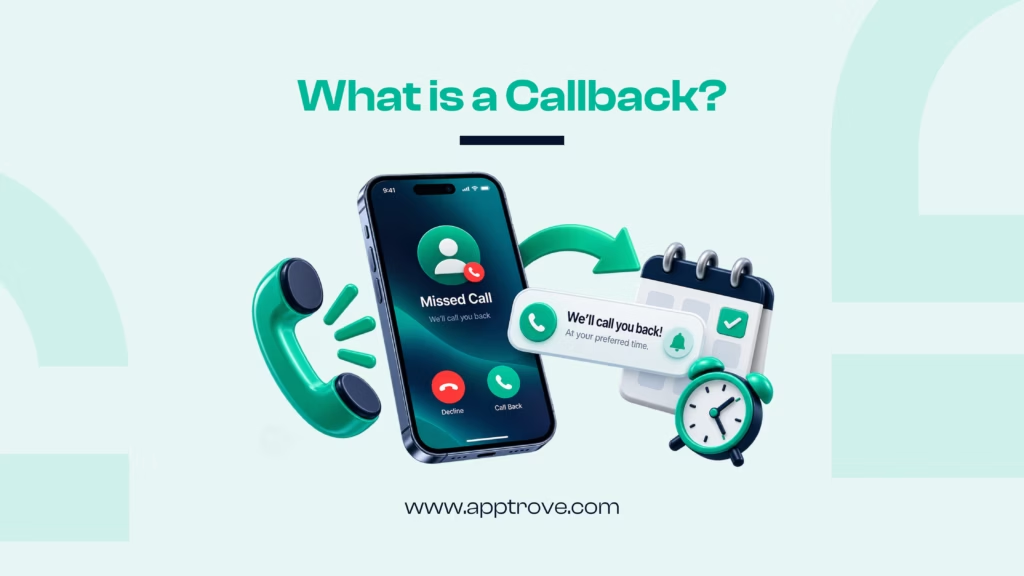
In essence, the callback idea is consistent: something occurs first, and the other action happens in return. This straightforward idea makes callbacks popular in programming, APIs, mobile marketing, analytics, telecommunications, and customer service.
It is essential to understand what kind of callback one refers to, because the use, aims, and information vary significantly depending upon that. In programming, callbacks instruct the system on what has to happen next after an operation has finished. In mobile marketing, callbacks help transfer app events from one server to another. In customer service, callbacks provide the user with an opportunity to get in touch with a representative of the company at a more convenient hour.
What Is a Callback?
The term “callback” refers to an action or a service that happens after an event or an operation. In simple terms, it is about sending one function to be executed later on by another function. In server communication, this can refer to sending information to a particular endpoint upon the occurrence of an event, while in telecommunications, it means calling back a customer upon their request.
The principle behind all these processes is referred to as the event-driven principle where when something happens, the system reacts to it.
For example, a website can wait for a user to click on a particular button before it performs its function. An application can wait for a response from a network request. In the case of mobile attribution platforms, it can send data to another server when a customer downloads an app or makes a purchase. If we are talking about contact centres, they can call the customer when an available agent comes up.
The Importance of Callbacks
Callbacks are the means for systems to react to events without the necessity of performing all actions sequentially.
In programming, callbacks can allow an application to continue doing other work while waiting for an operation to complete. In mobile marketing, they can help move event data between systems. In customer service, they can reduce the frustration associated with waiting in a telephone queue.
How Does a Callback Work?
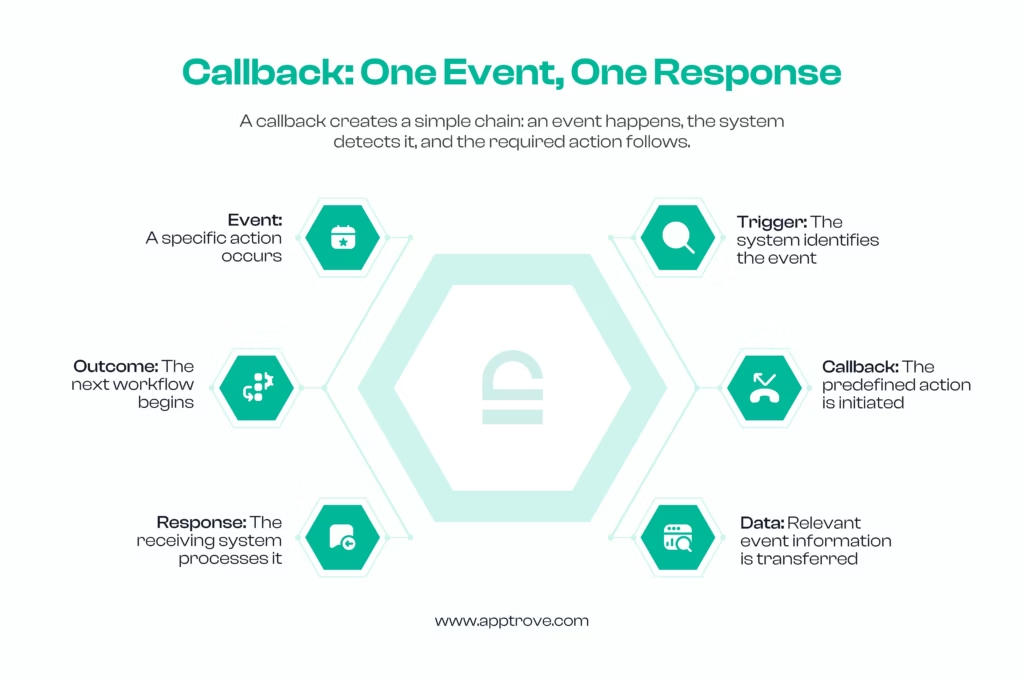
The particular procedure depends upon the context under consideration, but the general pattern is that it is fairly simple. To begin with, something happens. Following that, the system finds a callback that will react to that event. Finally, the callback is triggered/executed and might be handed some additional data related to the event.
Let’s think about a very simple application requesting information from the server. The application sends a request and does not need to know when it will get a reply. The application does not block its operation; it sets a callback to tell the application what to do when the reply is received.
This explains why callbacks are connected with asynchronous programming. Contemporary APIs and applications perform tasks for which the time of execution is unknown. A callback could be used to handle the result of the operation.
An event is necessary for a callback to get activated
The event can be defined as a finished network request, pressing a button, installing an application, making a purchase, receiving an error message or sales inquiry, etc. The event acts as the starting point, while the callback defines what should happen next.
Data Can Be Passed Through the Callback
Callbacks may pass information about the event that triggered them. Depending on how they are implemented, this information may be a response, type of event, time of the event, status, errors, and other important parameters.
As a result, callbacks are useful for initiating actions as well as for passing context from one part of the system to another.
Types of Callbacks
As the term is used in many fields of both technology and business, it makes sense to understand the main types.
Synchronous Callback
Synchronous callback means that it runs in the current flow of execution. It means that the calling process calls it before finishing its operation, which makes the next steps of the algorithm wait until the callback execution is completed.
Typical examples are callbacks called by methods like JavaScript’s map() or forEach(), where the callback gets executed within the operation and not scheduled for a later asynchronous event.
Asynchronous Callback
An asynchronous callback is called later, often after the process is finished. It is especially relevant for operations like network requests, various timers, file operations, etc., where the result is not available right away.
For example, a program may request information from a remote server and provide a callback to process the response when it arrives. The application can continue handling other work instead of waiting unnecessarily.
Server Callback
A server callback is a method whereby one system informs another system regarding a certain event. Different systems, including APIs, integrations, payment systems, analytical platforms and mobile marketing, utilise server callbacks.
A system can request either HTTP or HTTPS protocols through a certain already defined endpoint with instructions about the event. Depending on the approach used and industry, server callbacks may be referred to as postbacks.
What Does Callback Mean in Programming?
In programming, callback refers to a function that is used as an argument for another function. This means that the function receiving such an argument can use it whenever needed, meaning it can determine what should take place after the completion of some operation.
For example, ordering food in an application doesn’t mean sitting in the kitchen and watching the process every step of the way. You simply provide instructions about the way your order is being carried out.
Callback Functions in JavaScript
The use of callbacks in JavaScript is prevalent, as many operations carried out in a browser or at the server side are asynchronous in nature. A classic example of a callback is event handlers. When a user clicks on a button, the relevant callback function gets executed and updates the web page. Callback functions are used with promises, timers, networking operations, and many APIs as well. The callback function informs the program what to do when an event or operation is fulfilled.
Other Languages That Use Callbacks
The term “callback” is not restricted to JavaScript. For instance, in C, callback function properties are usually incorporated in the form of function pointers. One function can pass another function as an argument and call it when necessary. The same idea is used in Python libraries and frameworks too when this programming language is used for event processing or task completion.
What Is a Callback in Mobile Marketing?
In mobile marketing, callbacks are employed to pass the information regarding an app action from one server to another. It can be started when a user clicks on an ad, downloads an app, registers an account, pays for a purchase, or performs another in-app action
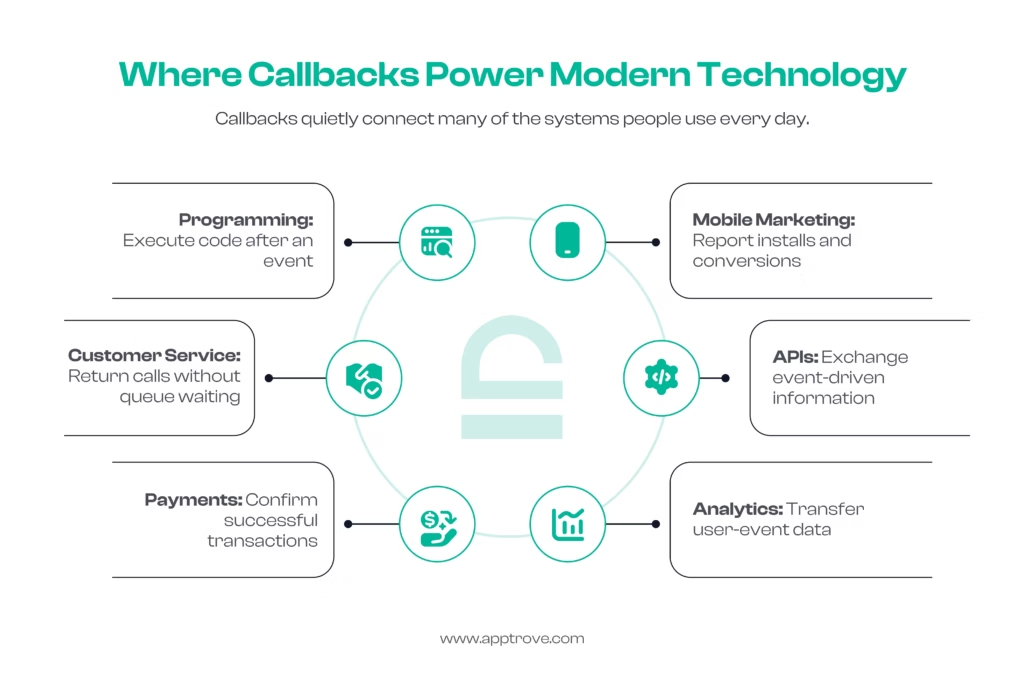
A callback sends information that can be formatted for attribution vendors, analytics companies, ad partners, or in-house platforms. The specifics of the information depend on how it’s configured, but in a general sense, it can include event type, time of the event, device IDs, etc.
Therefore, these callbacks can be very valuable in measuring the campaign as they allow different systems to understand what people do after the ad.
Callback and Attribution
Attribution systems are able to use callbacks for communication of post-install and conversion tasks to marketing partners or other platforms. For example, when a user installs the application and proceeds to the purchase, the event occurring afterwards may result in a callback with necessary information to be transferred to a receiving party.
This allows the information exchange to happen between different platforms and helps marketers determine what happens after using an advertisement.
Callback and Postback
In mobile marketing, the terms callback and postback may sometimes be confused. The postback usually stands for the data sent when the event takes place. In practice, such a setup can give attribution systems the ability to inform the partner about the installation or conversion and so on.
The precise terminology can vary based on the platform, so marketers should check how a specific vendor interprets the term ‘callback’ or ‘postback’.
Callbacks vs. Webhooks
Callbacks and webhooks are two related concepts but not the same.
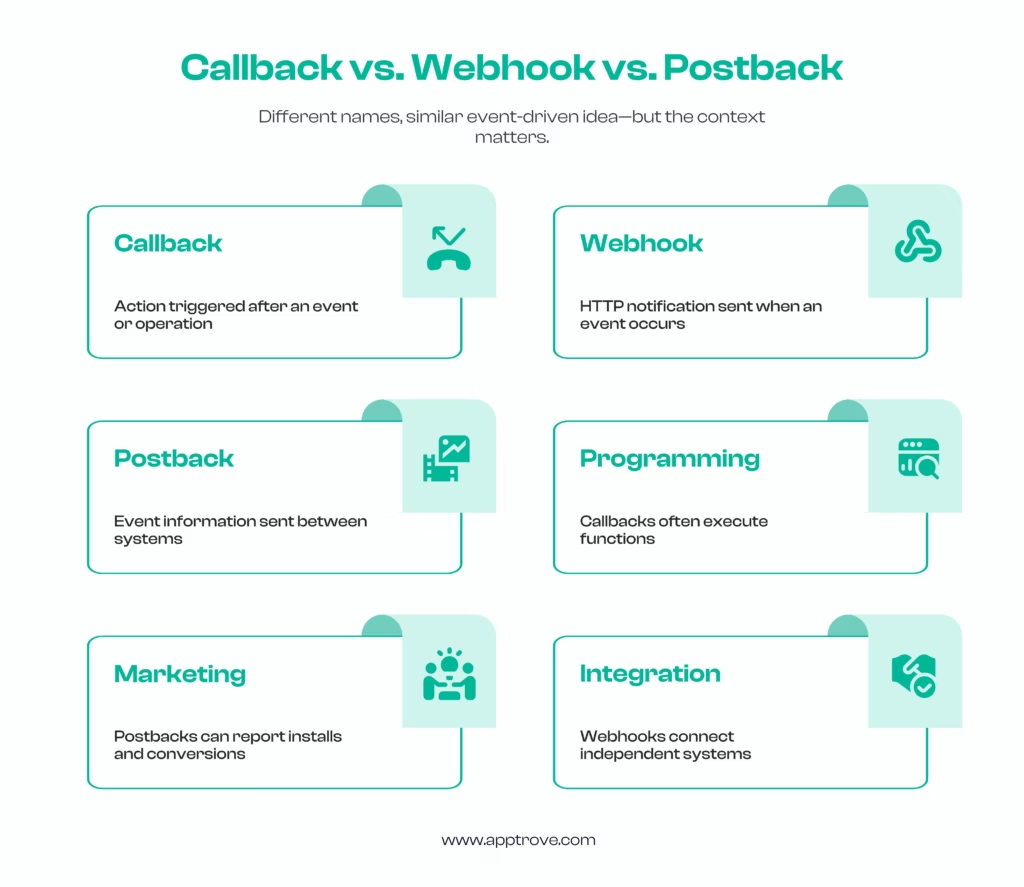
Callback is the term that refers to a broader definition of triggering an action or a notification of something following an event that took place. A webhook, on the other hand, is generally an HTTP-based technology in which one system sends an HTTP request to another system when a certain event occurs.
For example, when a payment is successful, a payment service can send a webhook to an e-commerce tool, which will allow the latter to update the order status.
When it comes to API architecture, the difference can also hinge upon which service creates and controls the endpoint. In this case, a callback API can be defined as the case when the service calls the endpoint provided by the client.
What Is a Callback in Customer Service?
In telecommunications and customer support, a callback means an agent returns the call of a customer while avoiding the necessity to keep them waiting. Customers can ask the company to call them back when the call volume is high or decide when they want to be contacted by the agent. Some technologies allow maintaining the place of a customer in the queue and initiating the call automatically as soon as the agent is free.
This method is effective since the customer does not have to listen to the music for a long time. The callback can be scheduled for a particular time, which makes it beneficial for follow-up sales, requests for support, appointments, etc.
Advantages of Callbacks
The primary benefit of callbacks is their flexibility. They enable systems to respond to events without having to adhere to a predetermined sequence of actions.
Improved application performance
Asynchronous callbacks allow the app not to be stuck while waiting for processes that take time to complete. The process can continue its work and make that call when the necessary result is obtained, instead of holding up the entire application until the required external activity is carried out.
Real-Time Transfer of Data
Server callbacks enable systems to send information about the events happening at the moment. This might be especially useful in mobile marketing, analytics, payments, and some other areas where the delay in getting information is of utmost importance since it can render the data useless.
Improved Customer Experience
Customer callbacks allow users of the service to avoid wasting time in a queue. Instead of spending several minutes or sometimes even hours waiting for an operator, the customers can request to receive a call from the operator at the moment when he/she is free or at a specified time in the future.
Flexible Integrations of Systems
Callbacks allow different services and applications to interact with each other without demanding constant polling. One system can inform another right when something important takes place without repeating the question “Is anything new?” over and over again.
Common Callback Challenges
Callbacks can be efficient, but they can also present technical and procedural issues due to poor design.
Callback Issues
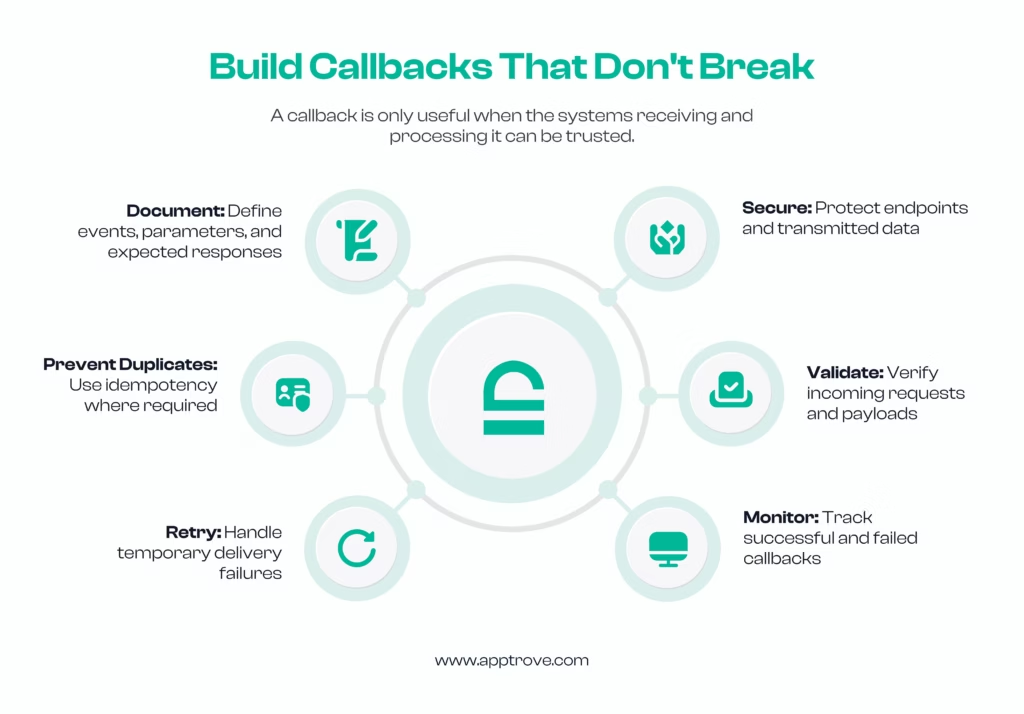
A callback may be unsuccessful due to unavailable receiving points, timeouts in the network request, authentication problems, or rejection of the payload. As a result, reliable implementations require error management and monitoring.
Repeatable Operations
A program may repeat a callback, which causes the program to resend the action of the callback. This situation can lead to repeated action if the system receiving these requests does not process repeated events.
For this reason, idempotency is vital when creating callbacks, especially when […]
Security Issues
Since callbacks can involve transferring information from one application to another, they must be safe in terms of authentication, authorization, transport security, validation of requests, and payload integrity. Thus, they must not trust the incoming request.
Callback Challenges
In software development, too many callbacks may lead to unreadable and unmaintainable code. Modern programming patterns such as promises and async/await can make asynchronous workflows easier to structure, although callbacks remain fundamental to many APIs and event-driven systems.
Best Practices for Implementing Callbacks
A proper callback system relies on well-defined events and responsibilities. Teams need to have a clear understanding of what events trigger the callback, which information should be exchanged, who will receive it, and what will happen in the event of failure.
Delivery failures should be monitored, and systems should include appropriate retry mechanisms where needed. Payload validation, secure communication methods, and careful handling of sensitive information should also be in place.
In the case of marketing callbacks, teams need to ensure that the naming of the events, the parameters, the timestamps, and the identifiers are clear and consistent. Poor structuring of event data may lead to issues in attribution and reporting, even if the callback itself was successful from a technical perspective.
Conclusion
A callback, at its core, is a way for technology to convey, “When something happens, I will manage what happens next.”
This simple mechanism is the basis for several disparate experiences. It may tell an application what action to take after a network request has been fulfilled, inform the advertising platform that a user has completed the action, set up two servers via event integration, or prevent a customer from being put on hold.
The way it works may vary, but the idea remains the same: an event triggers an action.
For developers, learning about callbacks is a must if they want to work with asynchronous and event-driven systems. For marketers, the ability to set up callbacks opens opportunities for connecting attribution and analytics platforms with advertising. For customer service representatives, a callback may help to eliminate tedious waiting.
When used in a proper way, callbacks allow systems to be more responsive, interconnected, and flexible, and this ability to respond precisely at the right moment could be a true asset in today’s world when technology is increasingly relying on real-time communications between various platforms.
FAQs
1. What is a callback in simple terms?
A callback is an action that happens in response to another event or operation. In programming, it is commonly a function executed after another function or operation reaches a particular point.
2. What is a callback function?
A callback function is a function passed to another function so that the receiving function can execute it when required. It is commonly used for event handling and asynchronous operations.
3. What is a callback in mobile marketing?
In mobile marketing, a callback is typically a server-to-server request triggered by an app event. It can transfer information about installs, conversions, or other user actions to an attribution platform, advertising partner, analytics system, or internal server.
4. What is the difference between a callback and a webhook?
A callback is a broader concept involving a response or action triggered by an event. A webhook generally refers to an HTTP-based notification sent from one system to another when a specific event occurs. The terms can overlap depending on the implementation.
5. Are callbacks synchronous or asynchronous?
They can be either. A synchronous callback executes as part of the current operation, while an asynchronous callback executes later, usually after another operation has completed.
6. Why are callbacks useful?
Callbacks allow applications and services to respond to events efficiently. They can support asynchronous programming, real-time data transfer, system integrations, analytics, attribution, and customer-service workflows.
from Apptrove https://apptrove.com/what-is-a-callback-apptrove-glossary-detailed/
via Apptrove


Comments
Post a Comment