TVOD (Transactional Video On Demand)
In the last 10 years, OTT Video has gone from being niche to becoming a mainstream method for accessing video content. Therefore, Platforms, Producers, and Content owners all want to determine how to monetise through OTT by setting how they charge for access to video content. Monetization through OTT can be achieved through a few types of monetization models, including TVOD, SVOD and AVOD, with TVOD being one key way to monetize premium content with a focus on new releases, live events and niche content collections with high value.
TVOD Definition & How This Works
The term TVOD stands for ‘Transactional Video on Demand’. Essentially, when a consumer pays a flat fee to access a video title or event, they’ve utilized TVOD to obtain that video or event.
To provide a further example of how TVOD might work, consider a consumer renting a movie through TVOD for a 48-hour duration or purchasing a movie for permanent access; the consumer would not have access to other video content unless they purchased a subscription to either an SVOD or AVOD service.
When it comes to OTT Video, TVOD has proven to be most relevant for either:
(i) Blockbuster video titles launching on the weekend
(ii) Final events of popular sporting events
(iii) Major concerts or
(iv) Limited engagement speciality events, where consumers perceive the value of the video content to be high and therefore are highly motivated to purchase because of urgency.
Marketers’ Definition of Video Streaming via SVOD, TVOD, AVOD in the ODT World.
Marketers define svod tvod and avod for their OTT business by looking at three different types of revenues. Svod (subscription-based) has its customers pay every month to gain access to all of their content. Avod (Ad-funded) has all of its subscribers see ads when they view their content instead of being credited directly to the creator of that content. Tvod (transactions-based) allows customers to buy or rent a specific piece of content from an OTT provider. To correctly classify all titles for proper monetization, product and growth teams need to understand the various meanings and mechanics of svod tvod avod.
How transactionally based TVOD works
Tvods are the easiest from a viewer’s perspective. They simply select the title they want to see, then select the price they are willing to pay, purchase the content and start watching. Beyond the purchase, however, there is heavy configuration that occurs for these titles relative to price points, rental time frames, and geo availability. In addition, all of the TVOD services tend to follow the two types of Tvod models available: electronic sell-through (EST) and download to rent. In EST, when you pay to purchase the title you receive permanent ownership of it, but in a rental (either download to rent or DVD) you are only able to access it within a specified time frame (between 24-72 hours), and you typically only have a limited number of devices to activate this rental title.
The meaning of TVOD also includes the structure of the rights and windows associated with each type of release. Typically studios will first release their blockbuster films on a premium TVOD basis (at higher prices) and then transition to standard TVOD prices, then onto subscription services, and lastly onto free ad-supported platforms. By releasing films on a sequenced basis, studios maximize lifetime revenues of each title by capturing multiple audience segments with different price points and sensitivities throughout the lifetime of the title. In the context of industry strategy discussions regarding the meaning of TVOD, pricing and exclusivity negotiations are of paramount importance and continue to evolve over time.
User Value Based on Subscription, Transactional, and Ad-Supported Models
From the perspective of the viewer, the meaning of svod TVOD avod can be summarized with respect to the manner in which they pay and the frequency with which they pay. Subscription services require monthly or yearly commitments for almost all titles; AVOD has no payment at the time of use, however, trade time and attention in exchange for exposure to advertising; and TVOD only charges when the user identifies a particular title as being of sufficient value to merit payment. This makes TVOD an ideal option for those who watch video infrequently, households that subscribe to a limited number of mainstream release films, or fans who would be willing to pay a premium for immediate (day-and-date) digital releases.
Market role and performance of TVOD
Adoption, revenue share, and regional patterns
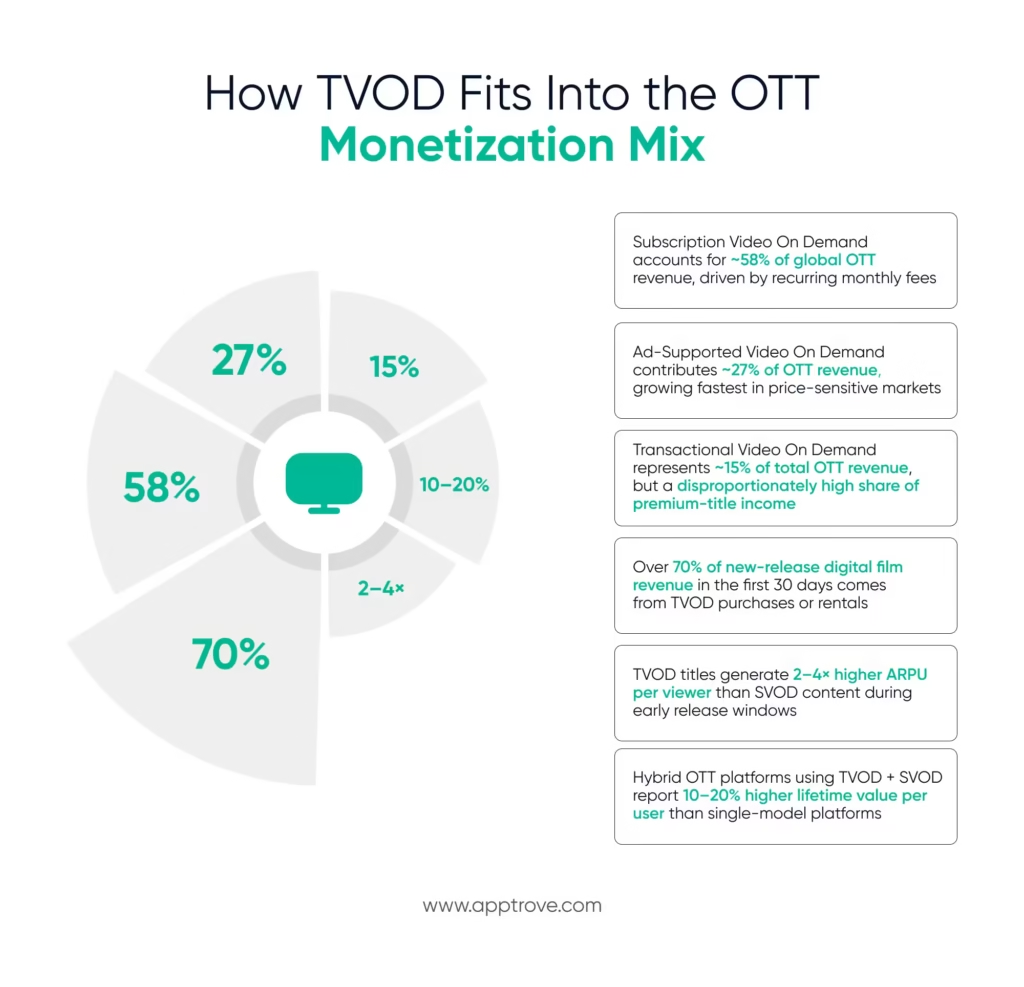
While subscriptions still dominate overall streaming revenue, analysts consistently highlight that TVOD plays an outsized role for tent-pole titles and special events. Recent breakdowns of global OTT revenue show subscription video on demand taking the largest share, but transactional video on demand remains critical in markets where consumers are price-sensitive yet willing to pay selectively for blockbuster content or pay-per-view sports.
In some regions, premium or exclusive libraries are monetized mainly through subscription, while one-off events and new releases are monetized via TVOD. Other territories lean heavily on ad-supported access, using TVOD only for the very top of the content pyramid. Hybrid platforms frequently mix TVOD and subscription tiers, offering members discounted rentals while still capturing higher average revenue per user from premium releases.
Apps-focused attribution providers report that platforms using TVOD often see purchase spikes clustered around major release dates, live sports fixtures, or holiday periods. This pattern contrasts with the steadier recurring revenue curve for subscription products and the impression-driven growth seen in ad-supported models. For finance and growth teams, this means forecasting TVOD revenue requires close alignment with content calendars, marketing campaigns, and seasonal behavior.
Content types that work best
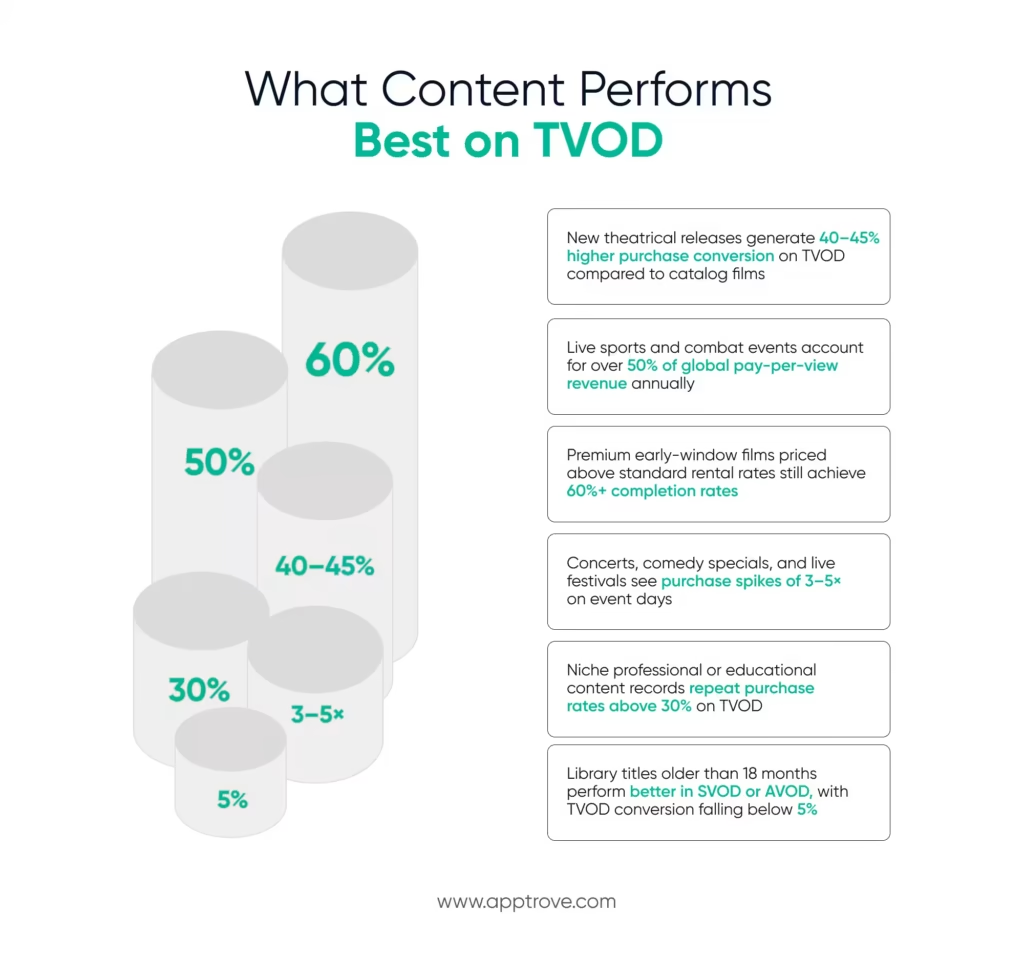
Transaction-Based Video on Demand (TVOD) is an effective monetization model for streaming content that is perceived by the consumer as high value and time-sensitive. Content types that frequently perform well in the TVOD business model include the newest theatrical releases, premium new release early-window films, top boxing and wrestling events, premium American or international football (NFL) or cricket sporting events, large music festivals and comedy specials, and certain categories of niche educational or professional video content.
A study of numerous streaming service companies supports that pricing based on a pay-per-view model typically increases the conversion or ticket sale ratio to an event perceived by viewers to be a “must-see live” versus catalog titles that typically convert better to the subscription model or through an ad-supported business model.
TVOD vs other VOD monetization models
Comparing economics across subscription, transactional, and ad-supported video
From a streaming platform owner’s perspective, the difference between the three different types of subscription services, (SVOD) or subscription video on demand, (TVOD) transaction-based or pay-per-view video on demand, and (AVOD) ad-supported video on demand, is mainly trade-off decisions between reach, predictability, and yield per user per view.
Subscription-based streaming services are primarily focused on predictable, recurring revenue streams and long-term retention. Ad-based services are primarily focused on large-scale and high-volume fill rate advertising revenue through monetizing each viewed impression of an ad through a CPM-based pricing model. TVOD, on the other hand, has the potential to generate extremely high effective average revenue per user (ARPU) from a smaller group of highly motivated purchasers, particularly when the product is exclusive or in its first digital window.
Hybrid strategy usage is becoming more frequent. Currently, many OTT Services utilize Hybrid strategies. They combine TVOD (Transactional Video on Demand) for New and Premium Titles with both SVOD (Subscription Video on Demand) library offerings and AVOD (Advertising Video on Demand) tiered service offerings as a means of delivering Older Titles or Broad Appeal Content (i.e. content that has mass market appeal).
Advantages and limitations of TVOD
From the business side, TVOD’s advantages include:
1) generates higher revenue per transaction at the beginning of an offering.
2) provides an unambiguous linkage between the cost related to marketing and specific content sales.
3) allows for experimentation with various price structures, combination offerings, and promotional discounts without altering the overall service model.
4) allows for an overall reduction in the total long-term liability for content cost, given that the End User is only billed for content they specifically choose to view.
However, there are limitations with TVOD
The End User has to make a deliberate purchase for each title they view. As such, the Platform must continually demonstrate the value of each title produced/marketed and communicate that value/or justify the price of each purchase to the End User.
For example, in a highly competitive marketplace, many consumers prefer to have “one subscription that covers everything” and thus will have a limit to TVOD purchases. In addition, TVOD will be significantly more sensitive than SVOD and AVOD hybrid services to direct marketplace friction between the payment process, login, streaming, and/or playback quality that has a direct impact on the End User’s willingness to purchase each title individually.
Measuring and Optimizing TVOD performance
Key KPIs and funnels
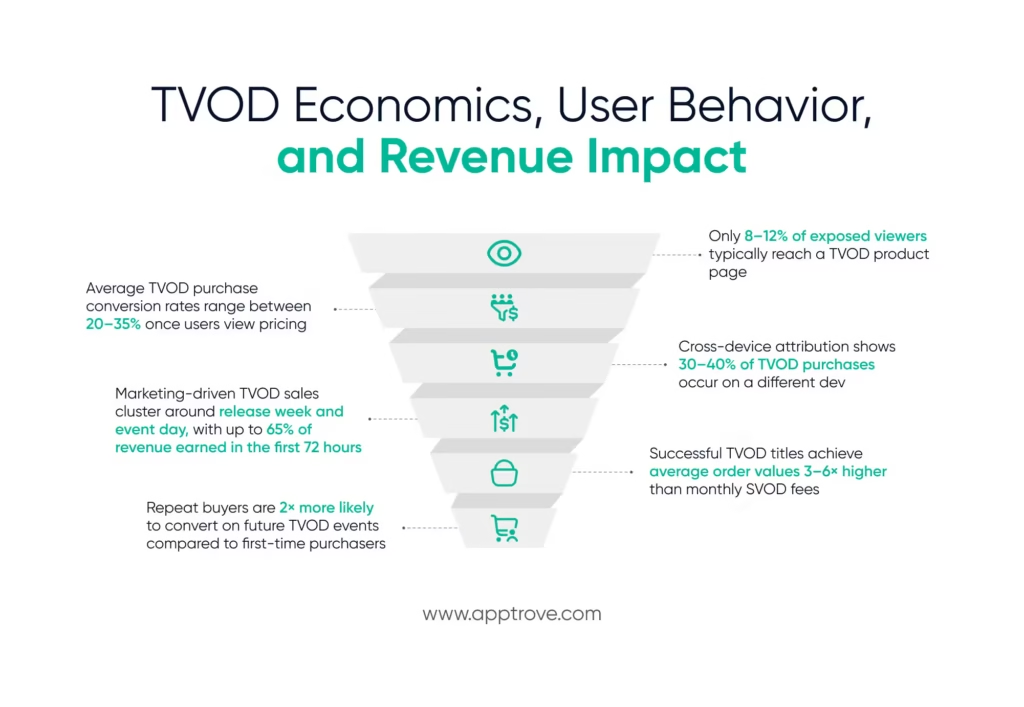
TVOD (transactional video-on-demand) is a type of transaction-based model that uses many individual transactions for tracking performance metrics of teams developing, marketing and growing their product. Some KPIs (key performance indicators) for TVOD experience could include: product page views, trailer plays, add-to-cart conversion percentages, purchase conversion percentages, average order value, refund percentages and downstream engagement metrics such as completion percentages and repeat purchase percentages.
To help connect the events that occur during TVOD experiences to the campaign sources that generated them, teams can use mobile measurement partners (MMP) and attribution platforms. MMPs and attribution platforms can also help teams determine the most effective channels, creatives and audiences for generating profitable pay-per-view transactions.
In addition, using deep-linking and cross-device attribution solutions can assist marketers in connecting large screen TV impressions from promotional materials (e.g. trailers) and transactional activities that are completed during the same household using different types of devices (e.g. web and mobile). This will allow marketers to understand how many customers who were shown a trailer or promotional material on a smart television turned around to complete a TVOD purchase using an alternative device within the same household, providing a more complete picture of the return on their ad spend.
Experimentation and pricing strategy
The meaning of TVOD also applies to how platforms perform test/experimentation processes. By having a precise revenue flow for each title in a television-on-demand (TVOD) model, AB-tests can be done with respect to pricing tier, rental window, pre-order discounts, or bundles with bonus and/or loyalty point incentives. Attribution data demonstrates whether a decrease in price will yield an increase in volume sufficient to offset the loss of margin, and whether the upsell flow from rental to purchase or from TVOD to subscription is achieving its objectives.
As these advanced platforms continue to segment their marketplace by geography, device, and user group, they will utilize their TVOD model to establish a premium pricing for 1st look/early access on connected television devices and a discounted pricing offering through mobile devices in price-sensitive areas. Ultimately, these experiments will provide data for identifying an optimal balance between short-term revenue generation and the customer’s long-term value through life cycle marketing.
Strategic considerations for launching a TVOD offering
When TVOD makes sense for your catalog
Using a television on demand (TVOD) model offers an additional opportunity for companies that have both evergreen titles and high-profile, high-impact content (such as films in early windows, live sporting events, etc.) to utilize the traditional transactional model for only a select few titles while placing all other items from their back catalogue or series in a subscription or ad-supported environment.
By separating the pricing of transactional content from subscription pricing, the perceived value of each is maximized and the risk of devaluing content by offering it too early or too cheaply in an all-you-can-eat model is mitigated. The TVOD model can also be used by smaller or niche publishers. For example, an instructional or professional training publisher could utilize the TVOD model to provide a module-only option to their customers, allowing them to only pay for the modules they need and establishing a direct relationship between the price they charge and the value of the content. Under these models, there is less pressure on the publisher to supply new content regularly, thus allowing the publisher to focus more on developing higher-quality content instead of just providing high volumes of new content monthly to maintain revenue from subscriptions.
Building measurement and growth around TVOD
To be successful with your TVOD launches, you have to do more than just turn on your PPV (pay-per-view) checkout process. You need to establish your north star metrics so you can measure total transactional revenue, titles sold per active buyer and contribution margin after marketing. You also need the technical plumbing in place (SDKs, server-side events, deep linking etc.) in order to track every step of an actual purchase journey from impression to payment confirmation which may happen on multiple devices.
Once you have set up this data infrastructure, marketers can create “always-on” campaign efforts that promote future releases, retarget viewers who watched a trailer but did not purchase the title and reactivate previous purchasers whenever similar titles are made available for sale. Over time, this creates a positive feedback loop where insights from prior events enhance forecasting, pricing and creative strategy for upcoming events.
The future of TVOD in a hybrid streaming world
Looking forward, the consensus among industry experts is that video-on-demand (TVOD) will continue developing as one element of an overall hybrid revenue generation model rather than being utilized exclusively as a stand-alone revenue-generating product.
As subscription saturation increases and as rules and regulations regarding the use of advertising and data privacy evolve, having the capability to charge consumers directly for premium or time-sensitive content will remain a distinguishing factor strategically in the marketplace. For certain segments of the viewing audience, particularly sports enthusiasts and fans of major motion pictures and other high-profile events, paying once for precisely what they wish to view vs. having to subscribe to ongoing services and/or pay via pay-per-view will continue to be perceived as the fairest and most transparent method to obtain access to premium content.
At the same time, the industry discussion around the meaning of subscription video-on-demand (SVOD), transactional video-on-demand, and ad-supported video-on-demand (AVOD) is shifting from “Which of these three revenue generation models is the most effective?” to “How can we utilize the combination of these revenue models intelligently for each customer and their specific content request?” The best-positioned companies within the media/entertainment sector will be those that have the flexibility to provide their customers with access via subscription, ad-supported, and targeted TVOD models of viewership, while providing their respective customers with rich measurement and experiment capabilities relative to determining the level of success for all three of these revenue-generation models.
In this type of environment, effective leaders will have a complete understanding and definition of what this is based on its full definition; an applied knowledge of the definition of TVOD as it relates to everyday operational functions; and an analytical and data-driven approach to analyze where TVOD fits into their particular product development roadmap alongside other revenue generation models (SVOD, AVOD).
from Apptrove https://apptrove.com/what-is-tvod-and-vod/
via Apptrove


Comments
Post a Comment