Understanding How Apptrove Determines User Location: A Complete Guide
Understanding your users’ location is important in a data-driven world because it allows you to get insight into their behaviour, target them effectively with your advertising, and make informed business decisions. Apptrove has access to geolocation technology that provides valuable insight about your user base through geographic data.
This guide will explain the ways that Apptrove uses to determine the geographic location of your users, what factors affect the accuracy of that geographic location, and how to use it to improve your business. We will also discuss IP geolocation, device metadata, and why geographic data from users may differ from what those users believe is their actual geographic location.
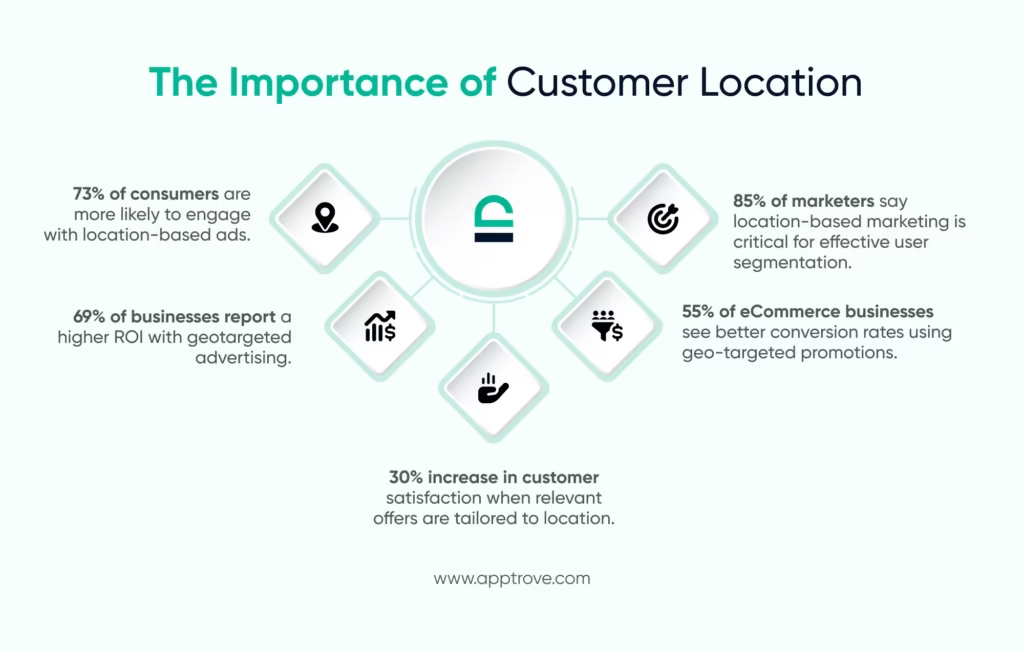
What is User Location and Why is it Important?
The term customer location or user location refers to a user’s geographic position at a specific point in time, and it is usually determined by either the user’s IP address or their device’s metadata.
Knowing an user’s location is critical to:
- Customizing advertising to regions and/or countries
- Analyzing performance in specific countries/regions
- Understanding user behaviour based on geographic trends
- Designing user experiences to provide localized content and offers
Knowing the correct location supports these objectives. Therefore, Apptrove utilizes a variety of technologies to determine a user’s geographic location in order to help you maximize your campaign and data insights.
The Role of IP Geolocation in Determining User Location
What is IP Geolocation?
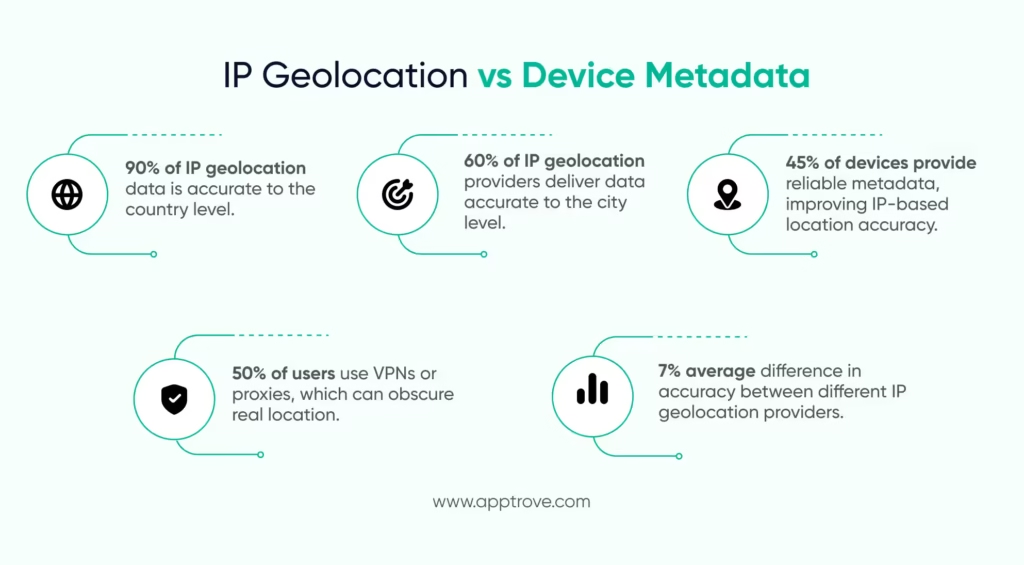
Apptrove primarily uses IP geolocation to determine a user’s location, as it captures the user’s IP address every time they take action with the app (i.e., when they click on an ad, download an app or perform an event in the app). Through third-party IP geolocation databases, the IP address can then be mapped to a geographic location.
The IP geolocation databases return the following information about the user’s IP address geographic coordinates:
- Country – The country in which the user is.
- Region / State – The region / state within the user’s country.
- City – A general idea of where the user is within the city or surrounding town/city.
By mapping IP addresses to geographic coordinates, Apptrove can identify where users are located and personalize content, ads, and campaigns. The accuracy of the data received from the IP geolocation provider will greatly impact the accuracy of this method.
How Apptrove Uses IP Geolocation Data
To determine a user’s location via IP information, Apptrove uses the services of certain third-party IP geolocation service providers. Each of these vendors uses a combination of complex algorithms/methods and large amounts of data in order to make an estimate of a user’s geographic location. While the resulting geographic accuracy can be somewhat good, generally only to the country level, some of these vendors may provide a more precise estimate, including the region or city level.
It is important to emphasize that Apptrove does not dictate or determine what method the third-party vendor employs to determine the geographic location of an IP address. As such, the level of accuracy/distance from an actual user’s location provided by one of the third-party vendors may differ from that of another vendor based on which vendor’s database is most current. The issue of varying levels of accuracy is a typical problem faced by all IP-based methods for tracking a user’s location.
Device Metadata: A Supplemental Way to Find User Location
The two main methods used to identify a user’s geographic location are IP address geolocation, which is the most common method, and the use of other device metadata (if available), which can improve the accuracy of the IP-based data set if the IP address geolocation method is unable to provide a usable location for the user.
What Are Device Metadata Signals?
Device metadata signals refer to the various signals that a device can provide, including:
(i) System Locale: The system language and region configuration of the device;
(ii) Network Country Code Indicators: Indicators related to the mobile or Wi-Fi network that the user is connected to, which can provide information about the geographic area where the user is located.
The purpose of using device-level signals is to provide additional information to augment IP-based location data, which can assist in resolving a user’s location. Note that, in some instances, these device signals will not be available, and their accuracy will vary depending on both the type of device and the network to which the device is connected.
Why Location Discrepancies Occur
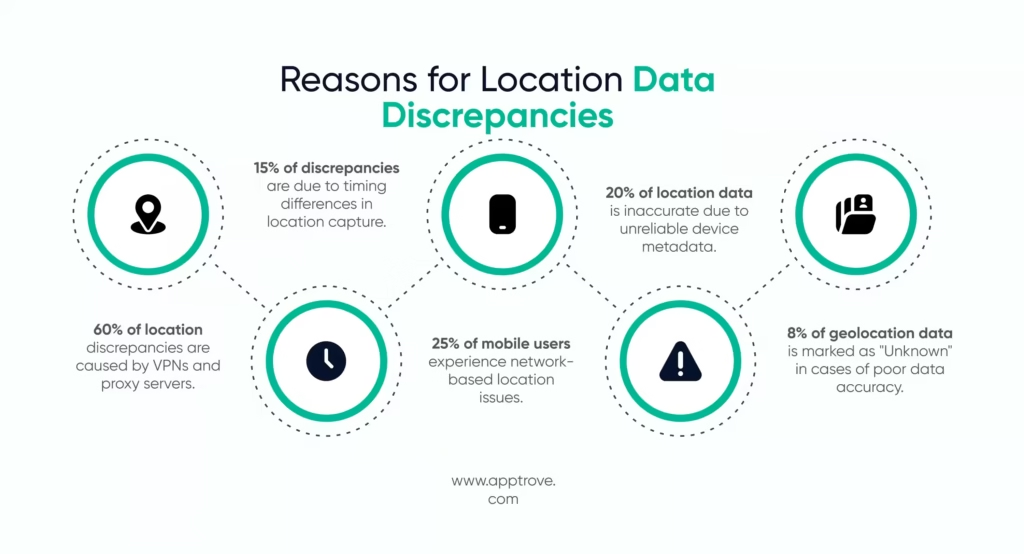
Although Apptrove does its best to provide accurate user location data, there can be discrepancies. These discrepancies are caused by some factors, and the first step in resolving discrepancies is to understand why they happen.
1. Masked/Obscured IP Addresses
One of the leading causes of discrepancies in user location data is the use of tools that mask or conceal real IP addresses, such as VPNs, proxy servers as well as privacy services like iOS Private Relay. These types of services are designed to mask or conceal a user’s true IP address, making it look as if they are in a different location from where they really are.
For example, a user living in the United States who uses a virtual private network (VPN) to connect to the U.K. server will show up on Apptrove’s records as having an IP address from the U.K.; although they actually reside in the U.S. This can lead to discrepancies when determining user location.
2. Differences in IP Location Databases
As a result of different platforms and services having their own third-party providers for IP geolocation, each provider has a method of mapping IP addresses to specific geographic locations. Because of this, the same IP may resolve to different locations depending on which IP location provider was used.
These variations are common and can cause discrepancies in the user country, region, and city data when comparing Apptrove’s location data to that of other platforms, such as ad networks or analytics tools.
3. Timing of Location Capture
Another reason for discrepancies in data can also be attributed to the timing of when a user’s location is identified. For example, the user’s location may be determined at different points throughout their entire interaction. A user may have an initial location from the time that he/she clicked on an advertisement, a second location from the time that the user installed an application, and a third location from the time that the user completed some type of activity within an application. If a user changes his/her network or moves from one geographic region to another between any of these timeframes, the geolocation data associated with the user’s IP address will not typically match.
As an example, if the user begins an advertisement in Chicago and then installs an application in New York City, the IP address associated with the Chicago ad click will reflect the Chicago area, while the installation IP address will reflect New York City.
4. Variability Due to Device and Network Type
Some networks and device types have limited or inconsistent metadata available; this can lead to errors in identifying a user’s location. For example, mobile networks may not always provide precise location information; some devices do not have features built into them that allow for precise geolocation functionality. The effect of this variability across various devices and networks, and across all the different ways users interact with each type of device or network, will ultimately create a challenge for all developers who are trying to locate a user’s location.
These are some of the major and effective reasons why user location discrepencies occur.
Fallback Handling in Apptrove Location Data
In situations where a third party’s geo-location database does not provide reliable accuracy of an IP address, Apptrove may provide an alternate location based on the IP.
This alternate location could be a more generalized form of location (e.g., just the country) or the location may be marked as “Unknown.” However, even without specific location data, businesses continue to have access to some level of location data.
How to Best Utilise Location Data in Apptrove
Understanding how Apptrove finds out where the user is located is only one aspect of effectively utilising the location data in Apptrove. While the location data provided by Apptrove can be useful, it will not provide accurate enough information to be used for making accurate geographical decisions. There are two basic ways to take advantage of the location data you receive through Apptrove:
1. Analysing Performance by Country or by Region
Utilise the location data of your users to analyse the performance of your campaigns by country or by region. By segmenting your campaigns by country or region, you’ll be able to see which countries and/or regions are performing the best for you and adjust your campaigns accordingly.
2. Geographic Segmentation and Reporting
Utilise the location data to segment users who live in different geographical locations. This will allow you to develop content, incentives and/or offers that will be relevant and effective to users who live in certain geographical locations.
3. Identifying High-Level Market Trends
Through an analysis of the geographic distribution of customers, emerging trends can be seen within different territories. The knowledge gained from this will prove particularly advantageous when moving into new markets or finding opportunities.
Summary
In conclusion, Apptrove uses IP Geolocation as the primary method of identifying user locations, with support from device metadata if available. While such data is often extremely useful for analyzing user behaviour and optimizing marketing initiatives, one must keep in mind that there may be variations in the data being analyzed. Understanding and taking into account various factors that could affect the accuracy of your location determination will enhance your ability to leverage this data effectively in developing a comprehensive understanding of your customer base for making data-based decisions that will aid you in achieving your goals.
By following these guidelines, you will increase your chances of maximizing the performance of your marketing campaign by ensuring that you are utilizing the best-performing location-based services and avoiding dependence on inaccurate or untrustworthy geographic data when making important decisions.
from Apptrove https://apptrove.com/how-apptrove-determines-user-location-guide/
via Apptrove


Comments
Post a Comment